Generally, the market size of an industry fluctuates across periods in response to socio-economic environments and internal industry shifts. The art market has similarly repeated cycles of expansion and adjustment amid these trends. However, forecasts and discussions regarding the art market have largely focused on short-term market changes to evaluate and project the market. Yet, relying solely on short-term fluctuations in market size has limitations in fully grasping the long-term trends and characteristics of the market. Therefore, rather than focusing exclusively on ups and downs at specific points in time, it is necessary to comprehensively examine the patterns of change in the domestic art market by analyzing the long-term trajectory of market size.
Accordingly, this report aims to analyze the long-term change trends of the domestic art market based on annual transaction scale data from the Korea Arts Management Service’s Art Market Survey. Furthermore, by comparing the scale of the global art market presented in Art Basel & UBS’s The Art Market Report with that of the domestic market, we intend to identify the characteristics of the domestic art market. Through this, we seek to comprehensively examine the changes and characteristics of the domestic art market based on data accumulated over a long period, rather than focusing on short-term market conditions or forecasts.
I. The Growth and Decline of the Art Market in Korea
In the modern and contemporary history of Korea, the foundation for the art market was laid even before liberation through changes in the country’s socio-economic landscape, spanning the Korean War, the economic growth era, and the IMF foreign exchange crisis. Particularly during the 1980s and 1990s, major art institutions—such as galleries, art museums, and auction houses that form the core foundation of today's domestic art market—were established, and the domestic art market is evaluated as having experienced its first full-scale boom following the 1988 Seoul Olympics(Yong-woo Lee, “Functions and Dysfunctions of the Art Market in 30 Years of Contemporary Art in Korea,” 1999).
Entering the 2000s, alongside gallery exhibitions and sales, art auctions and art fairs became active, diversifying the art distribution structure and expanding the market scale in earnest(Jinsu So, “The Korean Art Market and Business Cycles between 2005 and 2009,” 2009). In particular, the mid-2000s saw rapid growth in the art market driven by changes in the asset market environment, the emergence of new collectors, the expansion of the auction market, and the business expansion of galleries. With the addition of new collectors, the revival of the auction market, and the business expansion and transformation of galleries, the domestic art market met a full-scale boom in 2007(Myeongran Oh, “Art Market and Art Prices: Focusing on the Art Market in 2007,” 2008). Although data accurately capturing the art market size at the time are limited, the scale of the domestic art market in 2007 is estimated to be around KRW 600 billion.
Having experienced a boom, the domestic art market entered a sharp adjustment phase triggered by the 2008 global financial crisis. Market stagnation deepened as economic recession from the financial crisis was followed by consecutive issues such as proposed taxation on capital gains from art transactions, the use of artworks to create slush funds, and art forgery disputes(Jinsu So, 2009). Although the market rebounded around 2010, its scale lingered at around KRW 500 billion. Subsequent changes and developments followed, including the implementation of the transfer income tax on artworks, an increase in architectural artwork transactions, and the surging popularity of dansaekhwa, but the domestic art market showed patterns of repeating fluctuations and stagnation within a certain range rather than achieving significant growth.
This trend shifted dramatically again after COVID-19. Although a slump in the art market was anticipated due to the spread of COVID-19, following a temporary contraction in 2020, the market scale expanded rapidly starting in 2021, surging to approximately KRW 800 billion by 2022. This rapid recovery and growth of the art market was attributed to multiple factors, including expanded art investment demand driven by increased market liquidity and an asset market boom, the activation of online transactions and auctions, the emergence of new transaction methods such as NFTs, and the influx of new collector demographics(Jiye Ryu, KiHoon Hong, Jinhee Kim, “The Korean Art Market: Boom or Bubble?”, 2022). However, this upturn could not be sustained long-term, and the market transitioned back into an adjustment phase starting in 2023. Since then, the domestic art market has maintained a scale in the KRW 600 billion range, showing a rebound in 2025 to approximately KRW 638.2 billion compared to the previous year.
As such, the domestic art market has experienced rises and falls depending on socio-economic environments and internal market shifts, and these movements have repeatedly appeared across periods. Therefore, rather than judging market trends based solely on short-term fluctuations at specific points, it is necessary to comprehensively examine changes in market scale from a long-term perspective.
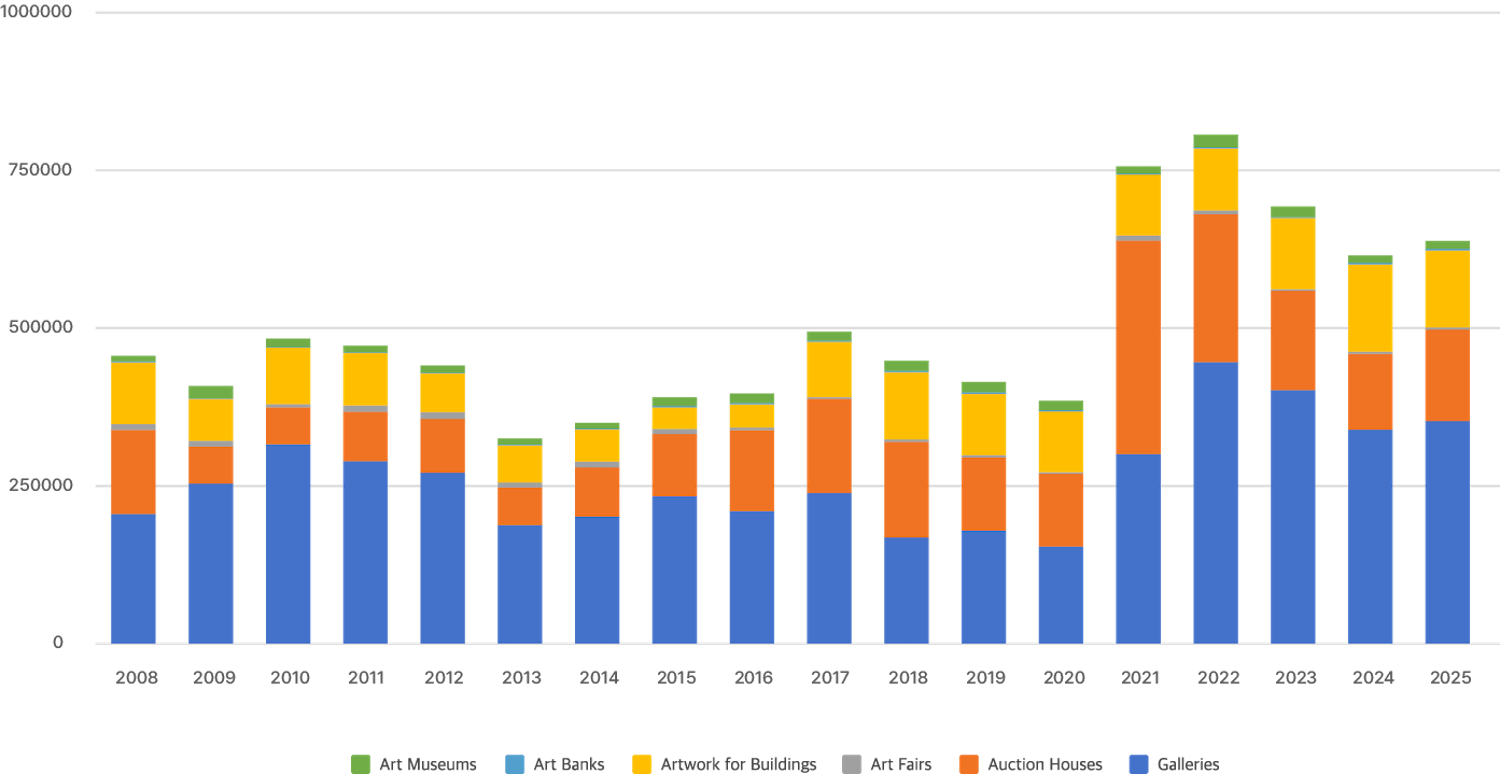
[Figure 1] Revenue Trends by Content Sector (2008–2025)
II. A Comparison of Changes in the Korean and Global Art Markets
What characteristics does the domestic art market exhibit when compared to the global art market? To answer this question, this report compares the domestic art market size from the Art Market Survey published by the Korea Arts Management Service with the global art market size appearing in Art Basel & UBS's The Art Market Report.
Because the two datasets differ in their scope, criteria, and unit of survey for aggregating market size, there are limitations in simply comparing absolute market scales. Therefore, the purpose of this comparison is not the absolute scale of both markets, but rather to examine the time-series direction of change and volatility shown in each dataset. To capture the relative trends and volatility of transaction sizes between the two markets, the transaction scale of each market was indexed based on the nominal transaction size. This ensures consistency with the calculation criteria of each dataset—given that the scales published by the Korea Arts Management Service and Art Basel & UBS are calculated based on nominal transaction values for the given year—and minimizes methodological assumptions caused by inflation adjustments or exchange rate fluctuations. The base year for indexing was set to 2008, the earliest point where data is available from both sources. Furthermore, public sectors and art fairs—which are difficult to directly compare with the global art market scale—were excluded from the distribution sectors of the Art Market Survey, narrowing the scope of analysis strictly to galleries and auction sectors.
| Year | Size of the Global Art Market (USD billion) | Size of the Korean Art Market (KRW 1 million) | Global Art Market Index | Korean Art Market Index | Global Art Market YoY Growth (%) | Korean Art Market YoY Growth (%) |
|---|---|---|---|---|---|---|
| 2008 | 62.0 | 338,717 | 100.0 | 100.0 | - | - |
| 2009 | 39.5 | 312,482 | 63.7 | 92.3 | -36.3% | -7.7% |
| 2010 | 57.0 | 374,554 | 91.9 | 110.6 | +44.3% | +19.9% |
| 2011 | 64.6 | 374,546 | 104.2 | 110.6 | +13.3% | -0.0% |
| 2012 | 56.7 | 360,410 | 91.5 | 106.4 | -12.2% | -3.8% |
| 2013 | 63.3 | 247,339 | 102.1 | 73.0 | +11.6% | -31.4% |
| 2014 | 67.7 | 282,709 | 109.2 | 83.5 | +7.0% | +14.3% |
| 2015 | 64.4 | 339,127 | 103.9 | 100.1 | -4.9% | +20.0% |
| 2016 | 56.9 | 343,623 | 91.8 | 101.4 | -11.6% | +1.3% |
| 2017 | 63.7 | 393,945 | 102.7 | 116.3 | +12.0% | +14.6% |
| 2018 | 67.7 | 346,534 | 109.2 | 102.3 | +6.3% | -12.0% |
| 2019 | 64.4 | 295,213 | 103.9 | 87.2 | -4.9% | -15.4% |
| 2020 | 50.3 | 269,170 | 81.1 | 79.5 | -21.9% | -8.8% |
| 2021 | 66.1 | 639,235 | 106.6 | 188.7 | +31.4% | +137.5% |
| 2022 | 68.1 | 680,972 | 109.8 | 201.0 | +3.0% | +6.5% |
| 2023 | 65.2 | 559,229 | 105.2 | 165.1 | -4.3% | -17.9% |
| 2024 | 57.5 | 459,545 | 92.7 | 135.7 | -11.8% | -17.8% |
| 2025 | 59.6 | 497,659 | 96.1 | 146.9 | +3.7% | +8.3% |
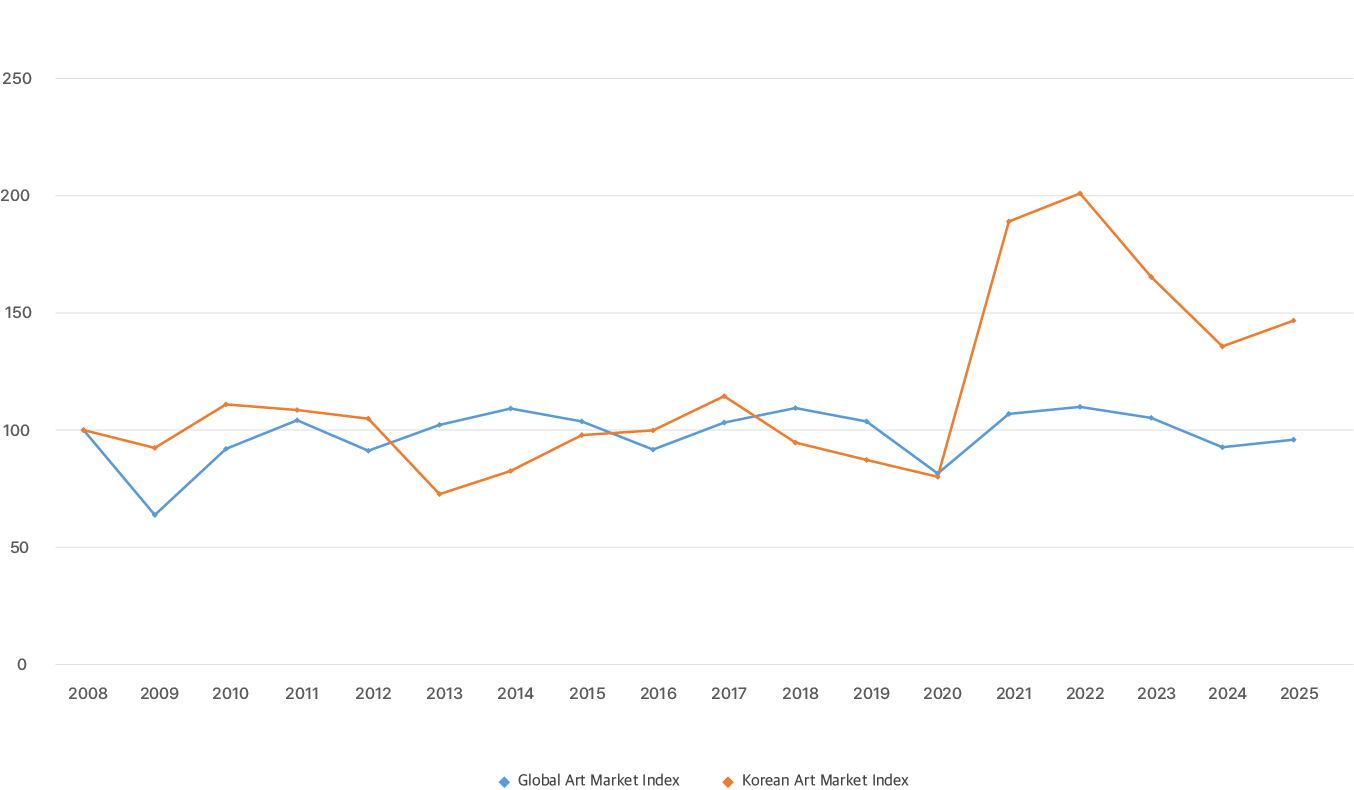
[Figure 2] A Comparison of the Global Art Market and Korean Art Market Indices
Comparing the change trends in scale between the domestic and global art markets reveals three key characteristics.
First, while the domestic art market shares some major turning phases with the global art market, their annual directions of change did not always align. Both markets shared a similar flow of contracting in 2020, recovering and expanding in 2021–2022, and adjusting in 2023–2024. Conversely, during earlier periods, the directions of annual increase and decrease often differed significantly. This demonstrates that while the domestic art market shares certain common trends with the global market, it also exhibits independent fluctuation patterns. The global art market has similarly experienced repeated rises and falls since 2008, showing a directional similarity to the domestic art market in specific phases such as the 2020 market contraction, the post-2021 rebound, and the 2023–2024 adjustment. However, differences in the direction of change between the two markets are also observed across certain years. This suggests that while the domestic art market shares the influence of international economic and market environments to some extent, it has demonstrated distinct patterns of change.
Second, the domestic art market exhibits relatively higher volatility compared to the global art market. Unlike the global art market, which displays relatively moderate fluctuations, the domestic market showed relatively large annual fluctuation ranges. In fact, while the global art market's year-on-year growth rate (YoY) moved within a range of roughly -12.2% to +12.0% between 2012 and 2019, the domestic market showed relatively sharp fluctuations during the same period, such as -30.5% in 2013, +18.9% in 2015, and -17.6% in 2018. This difference became even more pronounced after 2021. In 2021, the global art market grew by 31.4% year-on-year, whereas the domestic art market surged by 137.5%, exhibiting a relatively larger rebound. However, this needs to be interpreted as a result partially reflecting the base effect of the market contraction caused by the spread of COVID-19 in 2020. In index trends, while the global art market hovered around the 110 level in 2021–2022, the domestic market climbed to 201.0 in 2022, highlighting a major divergence in volatility magnitude between the two markets. This shows that the domestic art market tends to experience relatively larger increases and decreases in market scale compared to the global art market.
Third, even after recent market adjustments, the domestic art market has maintained nominal transaction scales higher than its past major lows. Looking at index trends, the domestic art market index stood at 135.7 in 2024, surpassing both the 2008 base index of 100.0 and the 70–110 levels of the 2010s lows, and rose further to 146.9 in 2025. In terms of market size, figures reached approximately KRW 459.5 billion in 2024 and KRW 497.7 billion in 2025, significantly exceeding the major lows of the 2010s, namely approximately KRW 247.3 billion in 2013 and KRW 269.2 billion in 2020. This indicates that unlike past cycles where markets regressed back to previous low points during post-boom adjustments, recent market size has remained at levels higher than in the past even after adjustments. Compared to the global art market, this characteristic is even more distinct. The global art market index fell to 92.7 in 2024 before recovering to 96.1 in 2025, yet it still remains below the 2008 base index of 100.0. Conversely, the domestic art market maintained levels higher than its base year, recording 135.7 in 2024 and 146.9 in 2025. Although the actual scale of the global art market also recovered from approximately USD 57.5 billion in 2024 to USD 59.6 billion in 2025, the 2025 scale fell short of its 2022 peak. Therefore, while the domestic art market has experienced adjustments following its rise similar to the global market, the nominal transaction scale of domestic galleries and auctions has maintained levels higher than past major lows even after recent adjustments.
Summarizing the preceding points, the domestic art market has repeatedly undergone rises and adjustments over the long term, with year-on-year fluctuations in market scale appearing relatively larger than those of the global art market. Furthermore, despite recent market adjustments, the nominal transaction scale of domestic galleries and auctions remains higher than past major lows.
However, this analysis has limitations as it is based on indices calculated using nominal transaction scales published by respective institutions. Because inflation, price changes, and exchange rates were not separately adjusted, it is difficult to interpret the increase in nominal market size as substantial market growth. Additionally, because the analysis did not separately evaluate how domestic and international socio-economic environments and various internal market factors influenced market scale, there are limitations in pinpointing the specific causes of observed changes.
Nevertheless, this analysis holds significance in examining patterns of change in the domestic art market beyond short-term fluctuations through data accumulated over a long period. Moving forward, it will be necessary to more closely analyze structural changes in the domestic art market by concurrently utilizing diverse indicators, such as real indicators accounting for inflation, transaction volumes, and average transaction prices.
#Korean Art Market #The Art Market Report
KAMS
from | Visual Arts Division, Visual Arts Information Team
The KAMS Visual Arts Division, Visual Arts Information Team plans to continue contributing to an equitable and sustainable art distribution environment by providing reliable art market and distribution information and constructing the systems and information foundation that are needed by those working in the field.