Auctions: Signs of recovery and greater discrimination
After a period of adjustment lasting a few years, the Korean art market began showing signs of a recovery in the first half of 2026. (The source of the data quoted in this text comes from “2026 Korean and Overseas Art Market Trend and Issue Report (First and Second Quarters).”) Based on figures calculated by the Korea Arts Management Service (KAMS) on total sales volume at Korea’s eight major auction houses, the Korean art auction market reached a sales peak of around 324.2 billion KRW in 2021 but declined for the next few years after that, reaching approximately 112.7 billion KRW in 2024. For 2025, however, total sales were back up to around 143.6 billion, an increase of 27.4% over the preceding year. This, combined with a small rise in the sell-through rate, suggested that market sales were experiencing a gradual improvement. At the same time, the fact that total sales for 2025 still amounted to only 44% of their 2021 peak levels indicates a need for caution in viewing the current situation as a full recovery. Indeed, the improvement strongly points less to an across-the-board recovery for the market as a whole than to a more discriminating approach among buyers, where more money is being spent on tested “blue-chip” artwork and expensive premium pieces.
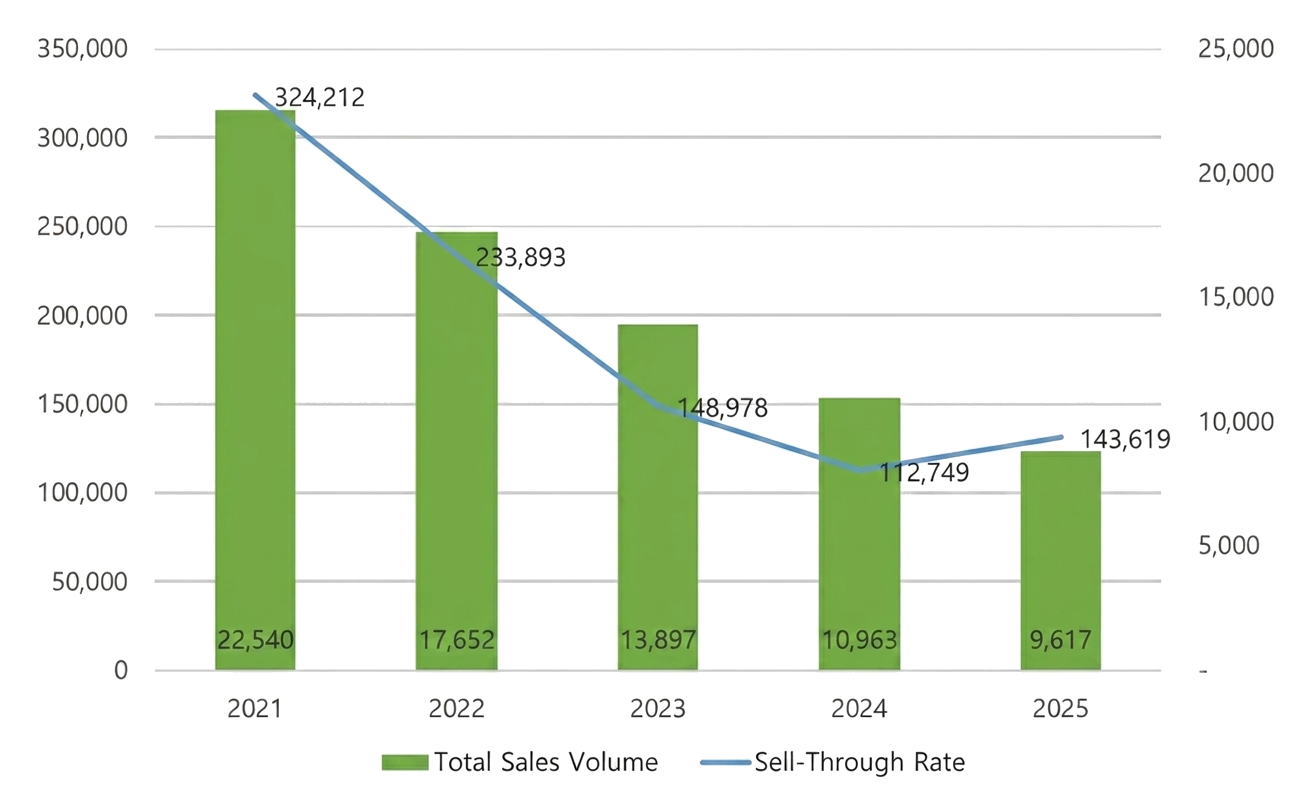
Figure 1. Size of the domestic art auction market, 2021–2025
(Unit: Value (Million KRW), Volume)
Seoul Auction was the first to send signals of an auction market recovery in the first quarter. Breaking with its typical approach of commencing auctions in February, Seoul Auction began them in January and recorded around 4.1 billion KRW in total sales, with a high sell-through rate of 72.6%. These figures were respectively around 18% and 15% higher than the rates recorded for the first auction month of February in 2025. Similarly, K-Auction achieved total sales of approximately 6.9 billion KRW in January, chiefly through premium artwork transactions. That level was roughly 90% higher than the 3.6 billion KRW registered in the same month a year earlier.
During this period, a selective market approach was in evidence. The failure to find a buyer in February for Lee Ufan’s work Dialogue—a highly anticipated work roughly 300x200cm in size with an estimated price upward of 1.2 billion KRW—symbolically showed increasingly clear variations in collection preferences even among different works by the same artists.
1. Dawn of the “10 billion” era and growing polarization
The most dramatic turning point for the Korean auction market during the first half of 2026 came in March. Seoul Auction achieved total sales of around 36.8 billion KRW for that month, rewriting the record that had been set four months earlier when it recorded 25 billion KRW in November 2025. The house had adopted a system that classified works valued at 10 billion KRW or more as “premium lots” and allowed only pre-registered bidders to participate. Even so, it successfully sold all three of the works that were finally presented (for a combined sales value of roughly 27.5 billion KRW).
A new record for a Korean artwork auction was set at that auction when Yoshitomo Nara’s work, Nothing about it, sold for 15 billion KRW. Previously, the highest price recorded had been for a work by Marc Chagall that sold for 9.4 billion KRW. This was also the first time a buyer in Korea had paid more than 10 billion KRW. Pumpkin by Kusama Yayoi also sold for 10.45 billion KRW, which meant that not one but two works in a single day had crossed the 10 billion threshold.
This stunning achievement was soon followed by more objective analyses attributing it less to an overall market recovery than to extreme polarization. According to Korea Art Authentical Appraisal Inc. (KAAAI), total sales for the eight major Korean auction houses amounted to roughly 68.5 billion KRW (not including commission) for the first quarter. This represented a rise of 161.7% from the same period in 2025, but most of the growth was accounted for by the aforementioned two artworks with combined sales of around 25.4 billion KRW. The average sell-through rate for the first quarter was 52.5%, up by 4% from the year before, but analysts suggested that this was attributable to the baseline effect from a 17.9% decline in the overall number of works submitted for auction, and caution was advised in interpreting the situation as a simple recovery of demand.
Another noteworthy fact about the two works that sold for over 10 billion KRW is that they were both by Japanese artists. Galleries located in Seoul’s Jongno area reported a noticeable increase in sales of Japanese artworks across genres this year, attributing this to the lack of large variations in their market value and the ease of liquidity. While the popularity of Japanese art is a positive development as a source of vitality for the Korean market, some have also cautiously suggested that the market value of Korean art should also increase.
2. Increased antique art offerings and the rise of a new generation of artists
During the months of April and May, Seoul Auction cooled off somewhat, with total sales in the range of 5–6 billion KRW. In contrast, K-Auction showed a clear turnaround. One of the most noticeable changes was the increased efforts it had made in 2026 to increase artwork supplies in its “antique art” section. Between March and April, the house maintained its sell-through rate in the 65–70% range by actively increasing an ancient art section that had previously been irregular in its supplies. Notable among the new inclusions were works by Heo Baekryon and Kim Koo. In its May auctions, it registered around 7.2 billion KRW in total sales and a 77.9% sell-through rate, joining the recovery trend associated with spring auction week in New York. The main practical contributors to the total sales were works with wide global recognition, including Infinity Nets by Kusama Yayoi (which sold for 2.1 billion KRW) and a large installation by Do Ho Suh, a rare occurrence for a Korean auction. The figures indicate that the market situation had improved markedly from the same period a year earlier, when the sell-through rate sat in the 40–50% range with total sales of around 3.1 billion KRW.
Another notable development lay in advancements among younger artists. A small number of emerging artists clearly stood out, with Mokha Lee central among them. At a May auction by Seoul Auction, Lee’s Chromakey Blue drew attention when it sold for roughly 3.9 times its starting price. The same auction also saw Under the Aurora by Sunwoo Kim and Gwansudo II by Moonassi selling for around triple their starting prices. Moonassi’s strong performance continued when her work Mindfulness achieved a final price around 3.7 times its starting price. At the Galleries Art Fair, Mokha Lee’s work sold for around 200 million KRW through Jason Haam—an exceptional achievement for an event where sales rarely surpass 100 million KRW. These figures show that even with so much money being directed at blue-chip artists, demand for artists from younger generations is also clearly taking shape.
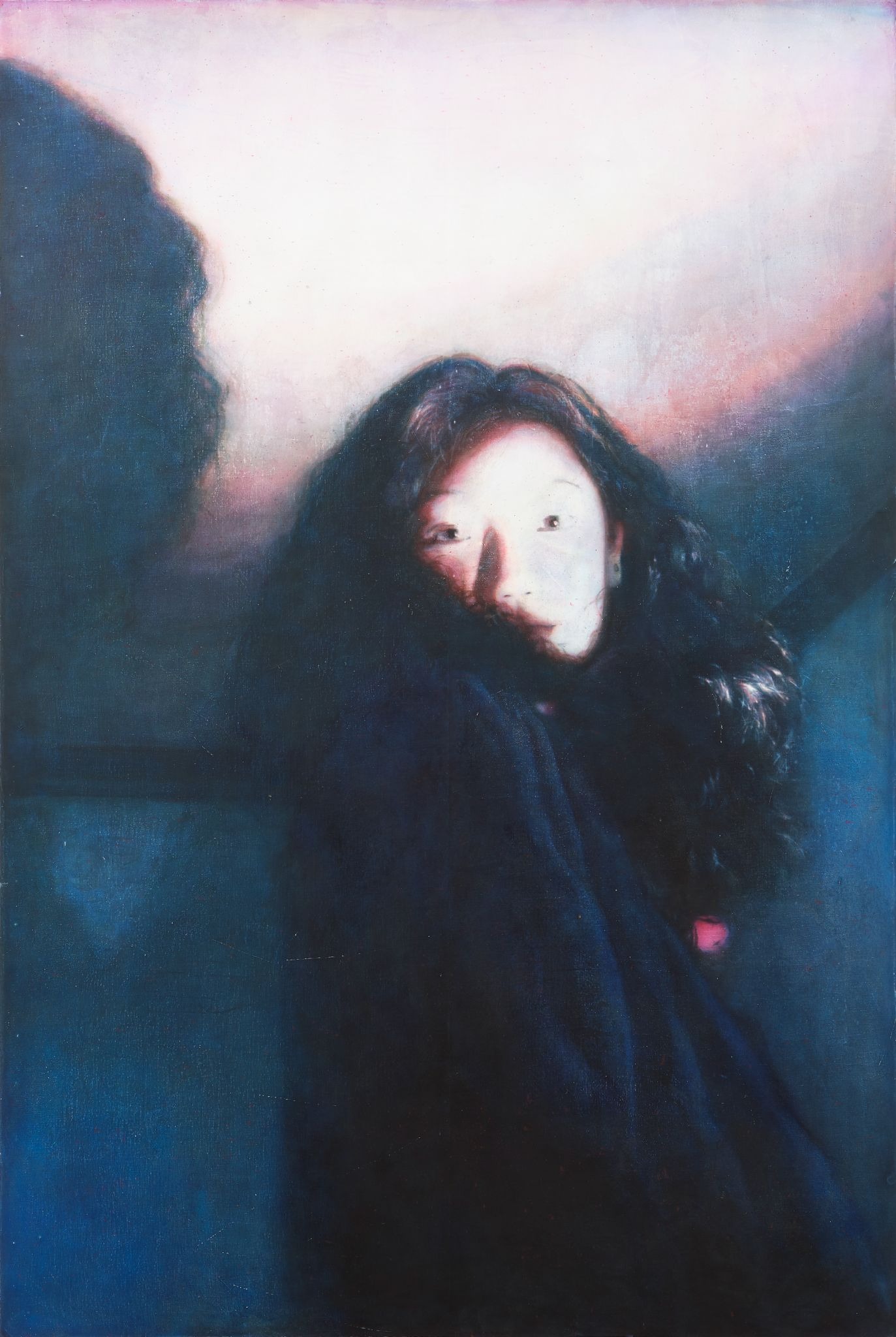
Figure 2. Moka Lee, Chromakey Blue, 2022, oil on cotton, 193.9 × 130.3cm.
Courtesy of Jason Haam and the artist
Art fairs: Growing scale and distinctive planning approaches
During the second quarter, the art fair market contributed to an influx of new collections and local art world activity through increases in scale and diverse planning approaches. The Galleries Art Fair took place at its largest scale ever and attracted around 50,000 visitors. While large sales were rare, the booths for middle to low price ranges and emerging artists proved more or less equally popular. The emerging artist booths in particular continued serving as a foothold for new collectors, with many selling out their entire inventory in the lower price range of up to 1 million KRW.
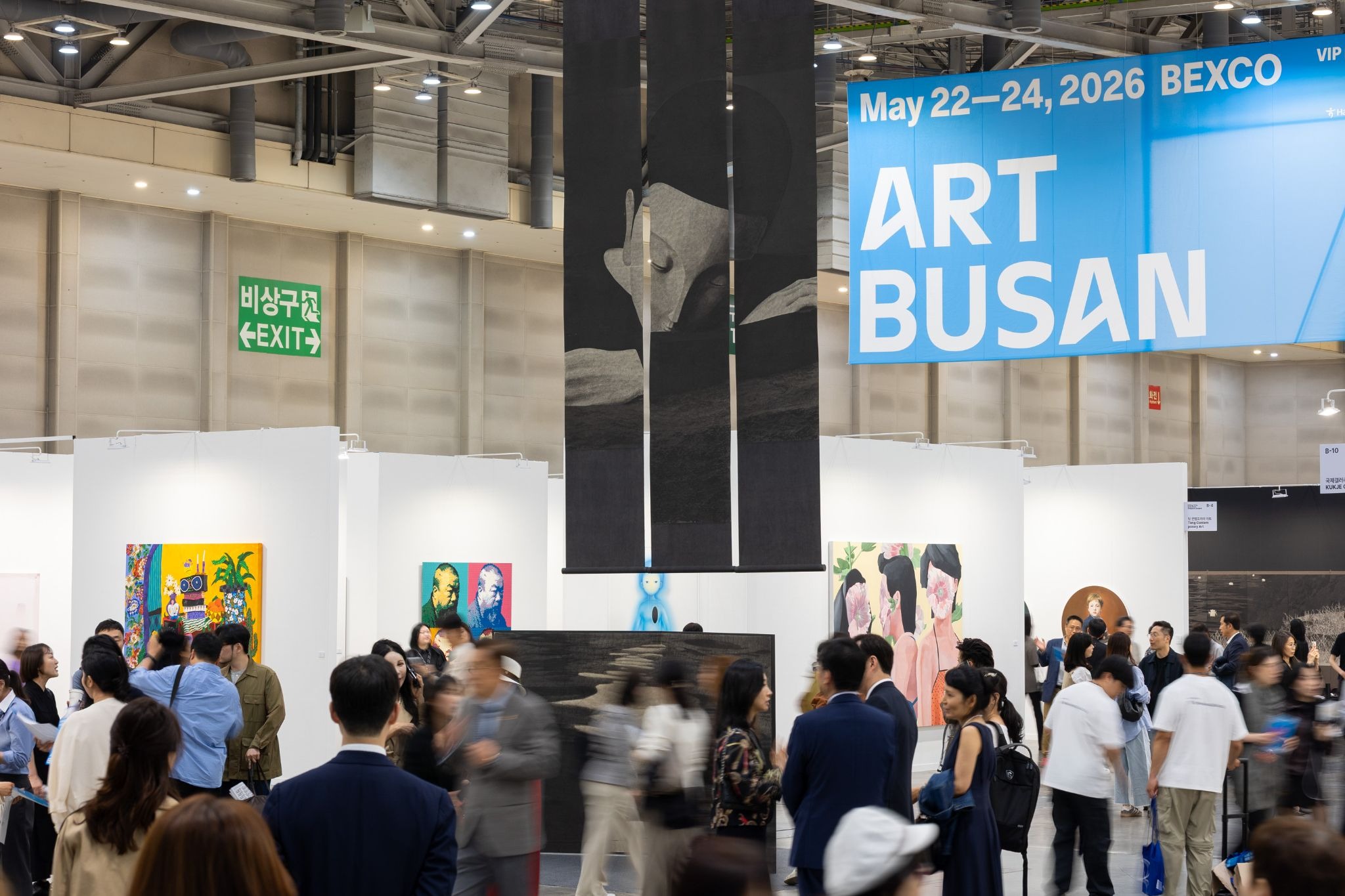
Figure 3. Installation view of works by the artist Moonassi, presented by
Everyday Mooonday (EM) Gallery in the CONNECT sector at the entrance of ART BUSAN. Courtesy of ART BUSAN 2026
Art Busan also suggested its potential to transform into a platform as an art fair. It greeted around 60,000 visitors, with a roughly 33% increase from a year earlier in the number of VIP preview visitors. Everyday Mooonday and Gallery Serene Space recorded sell-outs of their presented artworks, and larger galleries such as Kukje and Gladstone performed strongly, while the local Arirang Gallery set a sales record of 40 works. As this shows, positive sales results were distributed equally among larger galleries and local ones.
Also visible were more distinct planning approaches among different fairs. BAMA showed aspirations of being an art platform focusing on younger artists, Artfair Daegu sought to promote the local art market, ART OnO encouraged participation by Korean and overseas non-profits, and The Preview Seoul introduced a collector-driven fund of around 40 million KRW (the Re:art Awards). Emerging galleries performed strongly at the sculpture-focused PLAS Art Show, with Fandom Us Gallery recording more than 60 sales and YK Gallery more than 40. The Hive Art Fair, which adopted an unconventional approach of not charging for booths, was lauded for its planning capabilities but unfortunately failed to attract many visitors; the overlapping schedule with Art Busan and limited geographical access to the Magok neighborhood resulted in only 5,271 attendees.
Korean artists on the international stage
The first half of the year saw an all-time high level of activity by Korean artists in Europe and elsewhere overseas, with Korea and France celebrating their 140th anniversary of diplomatic relations and the 61st Venice Biennale taking place. The trend was already evident during the first quarter, when large-scale exhibitions were held by Haegue Yang at the Museum of Contemporary Art, Los Angeles (MOCA), Koo Jeong A at Hauser & Wirth Zürich, and Lee Bul at M+ in Hong Kong. Kim Ayoung, who had a solo exhibition at New York’s MoMA PS1 through March, was included by Artsy on its list of the 11 “Most Influential Artists of 2025,” while Young Joon Kwak was named as one of “8 Standout Artists” at the Whitney Biennial. At the main exhibition of the Venice Biennale, the three artists Yo-E Ryou, Michael Joo, and Gala Porras-Kim were selected among the 111 artists presenting their work.
Solo exhibitions by Korean artists were also observed in various European countries, with Lee Ufan playing a central role. A large-scale retrospective of his work was held at Venice’s San Marco Art Centre to coincide with his ninetieth birthday, and a permanent display of his work was opened at Dia Beacon in New York. The San Marco Art Centre exhibition was singled out by Artsy on its list of “10 Must-See Shows During the Venice Biennale 2026.” Other Korean artists featured in solo exhibitions included Park Seo-Bo (White Cube Gallery), Ha Chong-Hyun (Almine Rech Brussels), Shin Sung Hy (Musée Cernuschi, Paris), and Seulgi Lee (Musée Guimet, Paris).
The increased stature also translated into sales at overseas art fairs. Johyun Gallery recorded a sell-out of all works by artist Lee Bae that it presented at Art SG. Additionally, it sold 37 works (including pieces by Lee) at Art Basel Hong Kong and recorded a sell-out of all works at its Lee booth at Frieze New York. Kukje Gallery sold 25 works at Frieze Los Angeles, including pieces by Ha Chong-Hyun, Park Seo-Bo, and Haegue Yang. Overseas galleries were also proactive in introducing work by Korean artists: Lehmann Maupin sold works by Lee Bul and Yunshin Kim at Art Basel Hong Kong, while Hauser & Wirth sold Lee’s work at Art Basel in Basel, and Almine Rech sold works by Ha Chong-Hyun and Joung Young-ju. PKM Gallery was named by Artsy as one of the Basel event’s 10 best booths for a solo presentation dedicated to Young In Hong, and Gana Art’s booth focusing on Yoo Youngkuk, Choi Jong-Tae, and Park Dae-Sung was ranked as one of the five best at TEFAF New York. This trend was accompanied by institutional support. Around 100 works were sold by 12 Korean galleries that took part in EXPO Chicago with support from the Ministry of Culture, Sports and Tourism (MCST) and the Korea Arts Management Service (KAMS), while Art Basel Hong Kong contributed to greater awareness of Korean artists through special programs and networking events.
Consistent themes and issues in the first half of 2026
The first half of 2026 showed clear signs of recovery for the Korean art market, but the textures of that recovery were far from simple. The upper reaches of the market showed a comeback with the emergence of artworks selling for more than 10 billion KRW, but concerns were also raised that the situation might be a sign of polarization, with growth focusing mainly on a small number of expensive works. This indicates that the market trends observed in the 2025 sales data have carried over into 2026.
At the same time, other currents have also emerged within the market. The combined popularity of medium- to low-price artwork and emerging artist booths at Korean art fairs hinted at the potential for an influx of new collectors, and the competitive performance by younger artists in auctions has been another notable development.
Most importantly, the successes of Korean artists who have gained a global foothold through international events suggested that overseas market expansion—which the Korean art world predicted last year would be a key market engine for 2026—is indeed underway. The most distinct impression left by the Korean art market in the first half of 2026 was a situation where cautious selectiveness and a preference for tested value coexisted with proactive attempts at global expansion. What remains now is the task of helping these two currents expand to benefit emerging and established artists and local art communities as a whole, rather than benefiting only a select few blue-chip artists and major galleries.
Sunyoung HA
from | Director of MUHA
Director of MUHA. Her past activities include statistical surveys of the Korean art market and efforts to promote the overseas expansion of Korean art. She offers consulting in the areas of culture and art and is currently writing a “Report on Trends and Issues in the Korean and Overseas Art Markets” and a “Report on Overseas Art Markets.”