My Art Journey with Special Exhibition Coupons
Editor : Sunyoung HA / Director of MUHA Registration date: 2025-09-19
Editor : Sunyoung HA / Director of MUHA Registration date: 2025-09-19
The breeze has changed, and autumn is drawing near. Every September, art events of all sizes take place nationwide. During this period, discount coupons for art exhibitions and performances were issued by the Ministry of Culture, Sports and Tourism and the Korea Arts Management Service to encourage cultural and artistic participation. Thanks to that, I received a discount on the exhibition fee, so I couldn’t pass it up. From September 4–5, at the start of autumn when the summer heat eased, I went on a two day art trip to Daegu and Busan.
√ Daegu : Exploring Art from Tradition to Modern and Contemporary

Sunlight shone through wooden pillars and pine shadows cascaded down the slope. Kansong Art Museum Daegu, where nature and tradition converge, reflects the aspirations of its founder Hyungpil Chun. The permanent exhibition ticket for adults is 6,000 won, but with a NOL Ticket (Interpark Ticket) discount coupon, it was reduced to 3,000 won. Exhibition Room 1 features the permanent exhibition at Kansong Art Museum Daegu, with artworks rotated three times a year. This protects traditional Korean artworks from light damage while presenting the Kansong Collection in sequence. Visitors can enjoy new permanent exhibitions three times annually.
Exhibition Room 2 featured “Huiryong Cho (U-bong), Plum Blossom Studio,” offering a quiet, intimate experience of the work. On a dark night, through the window of a small house amid blooming plum blossoms, a scholar gazes at a single branch in a vase. This work, freely depicting mountains, trees, and plum blossoms, is a hallmark of Huiryong Cho’s mature style. Gazing at this piece feels like confronting the scene directly.
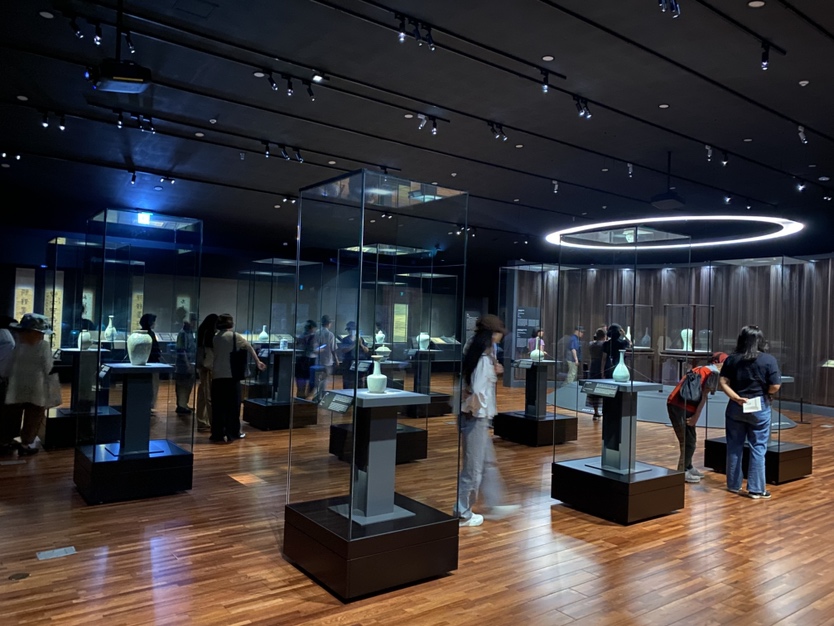
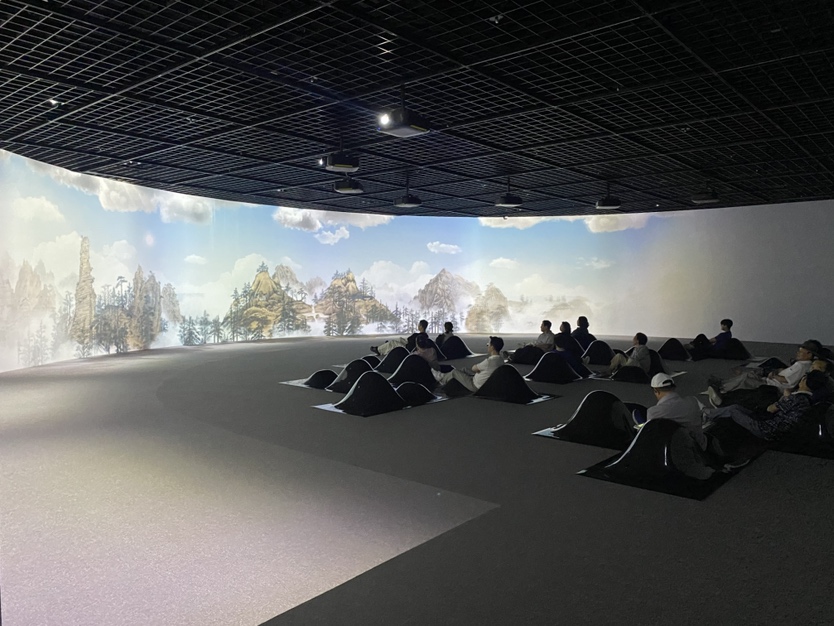
View of the permanent exhibition at Kansong Art Museum Daegu (left) / View of the Immersive Digital Art Exhibition The Flow (right)
In Exhibition Room 5, the immersive video installation 《The Flow》 invited viewers to sit on wave-shaped chairs and experience digital projections of the Kansong Art Museum collection on a 38-meter, semi-circular screen.
After visiting the Kansong Art Museum Daegu, I crossed the street to the Daegu Art Museum. On a sweltering afternoon, I stopped by Hands Coffee, Daegu Museum branch for a coffee break and to enjoy its beautiful interior. The café is famous for its ice cream waffles, and its merchandise corner offers a variety of items, making it ideal to visit before or after the exhibition. After a brief break, I entered the Daegu Art Museum, where adult tickets cost 1,000 won and are available at the kiosks. Upon receiving my ticket, I headed to the third floor to reserve a spot in the digital virtual space Immersion. Since the sessions run in 30-minute slots for groups of ten, it’s recommended to book this space upon arrival. Exhibition Halls 4 and 5 on the museum’s second floor hosted The Wave of Modern Painting in Daegu. Daegu established modern educational institutions early, bringing Western-style art education. In the 1920s and 1930s, art exhibitions and clubs flourished. During this period, prominent Korean modern artists from or active in Daegu—Insung Lee, Dongjin Seo, Ilbong Son and others—emerged.
This exhibition, organized chronologically, is divided into the following chapters:
Chapter 1: The Reception of Western Painting
Chapter 2: The Full Development of Modern Painting in Daegu
Chapter 3: Works from the Post-Liberation Period to the Korean War
Chapter 4: The Emergence of New Trends after the War
In the mid-to-late 1940s, with the establishment of specialized art institutions like Seoul National University and Hongik University, artists began transitioning into academic roles as professors. When the Korean War broke out in 1950, nearly half of the art community moved to the North, while a few went South. The Daegu art scene experienced significant growth during the Korean War due to the influx of arriving artists. Amid this atmosphere, a post-naturalist trend emerged in the Daegu art scene, creating a distinct new style. From the late 1950s, abstract painting began to appear in earnest. Visitors can trace the evolution of artistic styles across periods by viewing the exhibition chronologically.
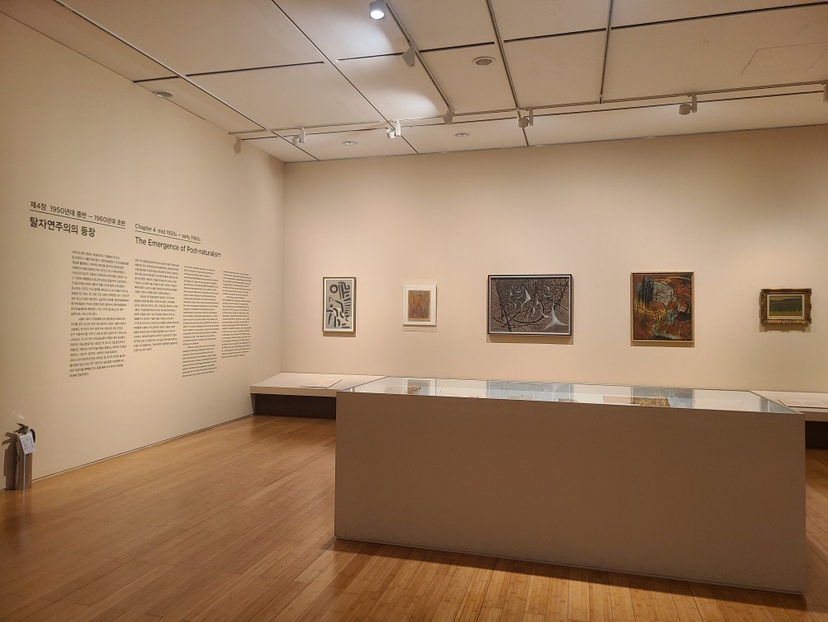
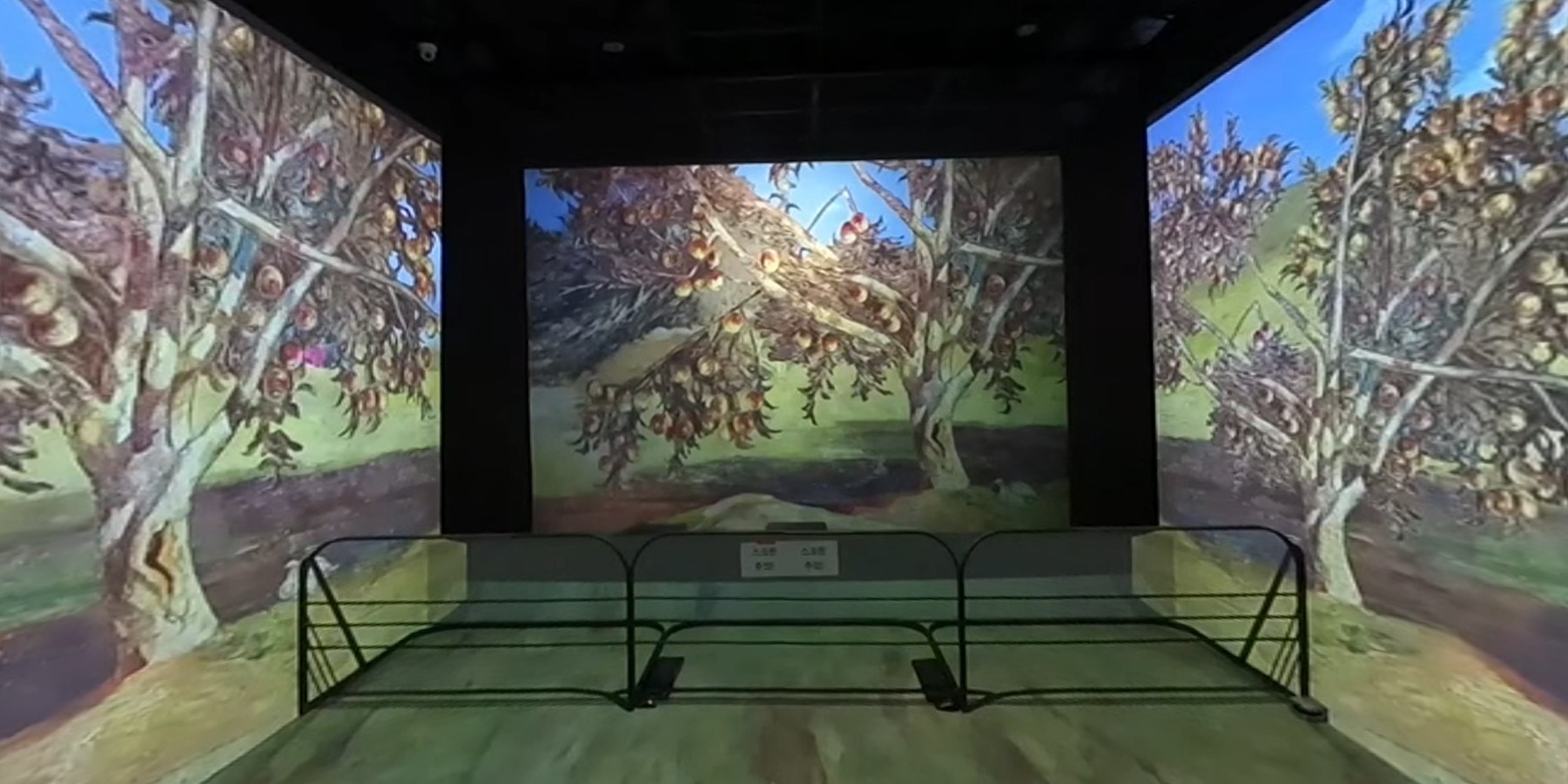
View of Chapter 4: The Emergence of New Trends after the War Daegu Modern Painting, Daegu Art Museum. (left) / Digital Virtual Space Immersion: Six works created based on 47 pieces by 15 artists from the Daegu Art Museum collection. (right)
After viewing the exhibition, I headed to the third floor and entered the Immersive screening room to watch An Invitation to Daegu’s Modern Landscapes, featuring works by Daegu modern painters Dongjin Seo and Woojo Kim. This video brings Daegu’s historical landscapes to life as authentic content, enhanced by the artists’ narrated commentary. It offers viewers more than just an aesthetic experience; it allows them to walk alongside the artists through the works, creating a deeply moving encounter. The experience resonates powerfully, as though conversing with the artists across time and space.
After exploring the modern painting exhibition at Daegu Art Museum, I entered LEEAHN Gallery Daegu, where I was greeted by Daesung Park’s magnificent Korean painting, presenting a completely different sensibility. His large-scale work Waterfalls, 7 meters high, demands a gallery with high ceilings. The base of the piece features an inscription in a Korean script designed by the artist, evoking the sound of the waterfall cascading in two streams and the sensation of wind blowing through.
On the second floor, his new work, the Willow series, has been installed. The artist explains that the series captures the spirit of the willow trees along the banks of Gyeongju, inviting viewers to see the full moon through their own perspective, framed by the scattered weeping willows.
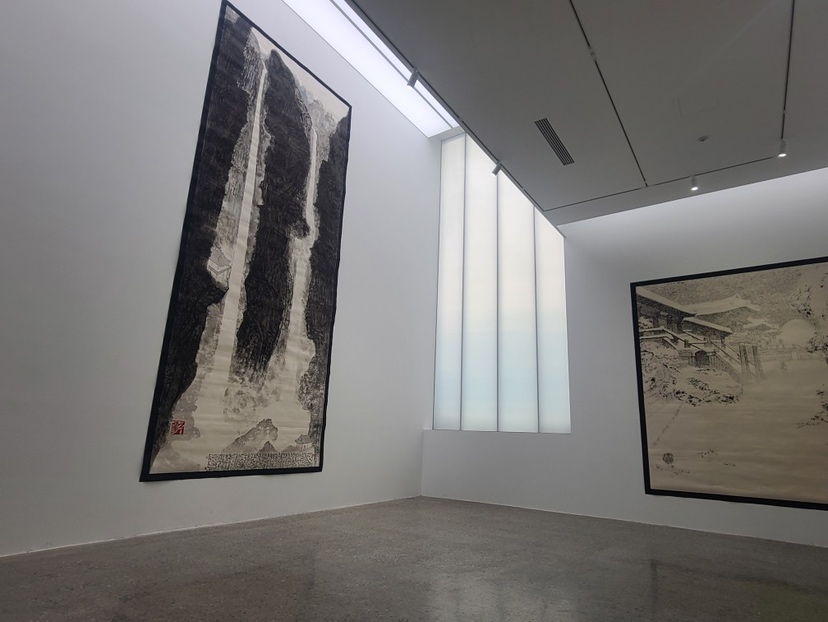
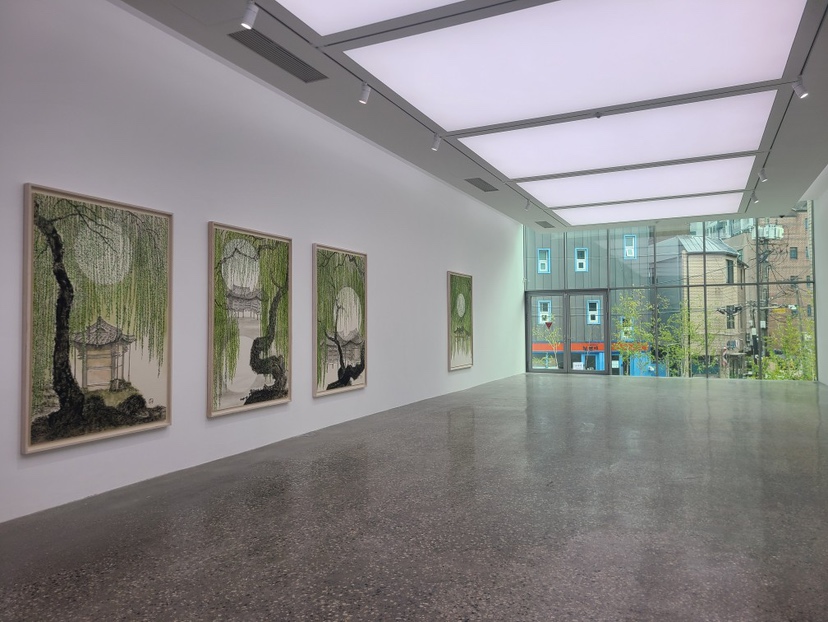
View of Daesung Park’s solo exhibition Hwayeo giin at LEEAHN Gallery Daegu, featuring Waterfalls and Snowscape (left) / iew of Daesung Park’s solo exhibition Hwayeo giin at LEEAHN Gallery Daegu, featuring the Willow series (right)
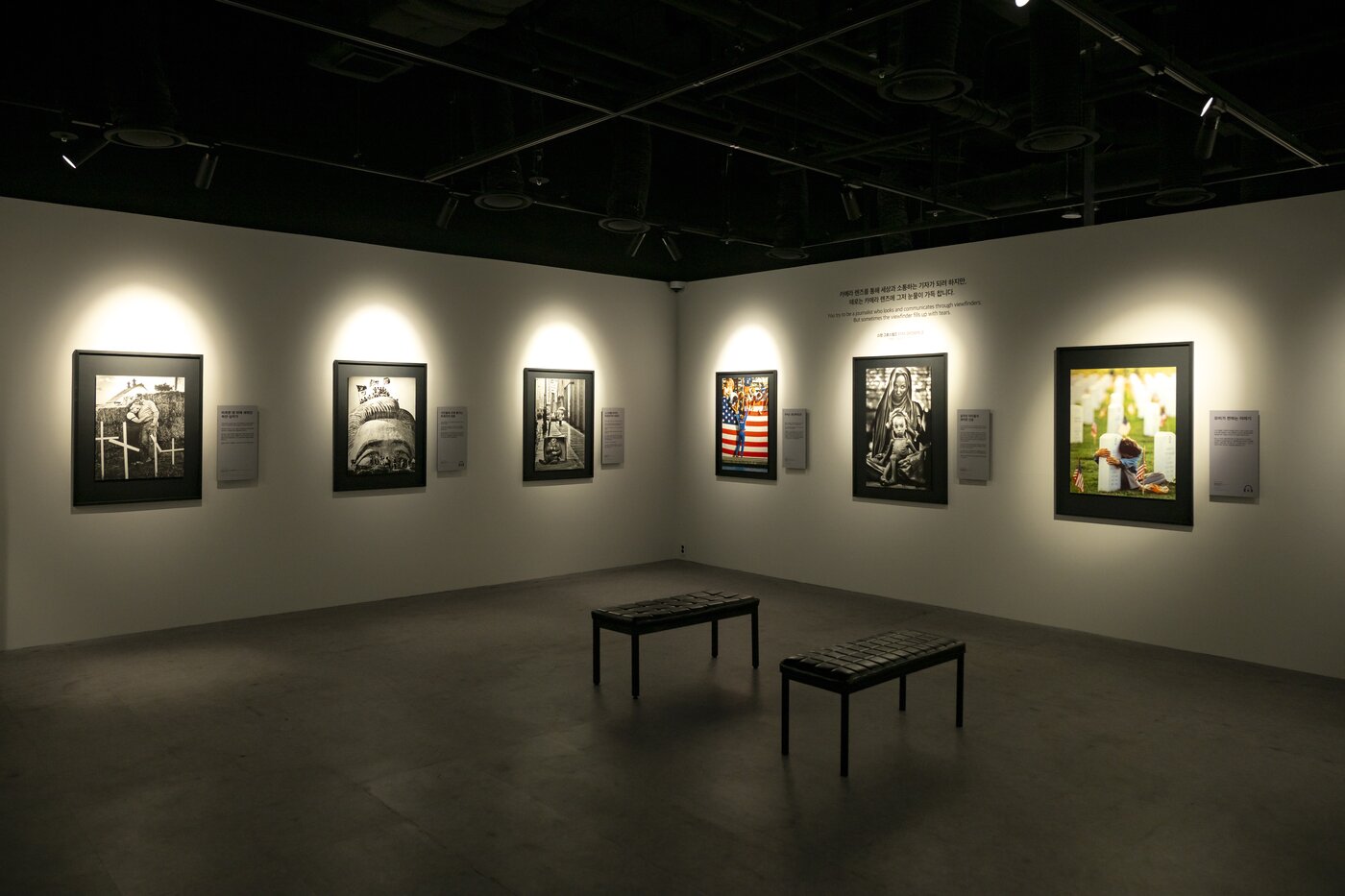
View of The Pulitzer Prize Photographs – Shooting the Pulitzer at Museeum Daegu. ⓒphototravel_david, Source: News1
Note: Images are from press materials, as photography was prohibited inside the exhibition.
I headed to my final stop in Daegu. At Museeum Daegu, just a ten-minute walk from the gallery, Pulitzer Prize Photographs–Shooting the Pulitzer presented photos from different historical periods, documenting pivotal moments in world history. Starting in the 1940s during World War II, each scene conveyed the weight of the events and the emotions of the people involved, offering viewers poignant moments for reflection.
After so much art, I still wanted something to eat, so I walked to the nearby original Hwang Dduk store, popular with Daegu students. The curry-flavored tteokbokki had a universally appealing taste, and its affordable price truly earned it the title of "soul food."
√ Busan : Exploring Art from Nature to Contemporary and Global

After visiting the exhibitions in Daegu, I took the KTX to Busan, arriving in just 45 minutes, and headed to my accommodation in Yeongdo, a ten-minute drive from the station. Yeongdo has recently become popular with travelers, offering everything from unique remodeled houses to budget-friendly hotels. Hotels near Yeongdo Bridge offer daytime views of the calm harbor and parking lots, but at night, the area transforms into a lively food stall street glowing with lights—a striking contrast. With calm days, lively nights, and nearby attractions like the Arte Museum, P.ark, Huinnyeoul Cultural Village, and Taejongdae, it’s the perfect starting point for a Busan tour.
The next morning, on my way to the Arte Museum Busan exhibition, I stopped at the P.ark building across the street, its unexpectedly large scale catching my eye. This ship-shaped cultural space, part of a ship repair company, is a must-visit in Yeongdo. Its three floor-to-ceiling windows offer sweeping views of the sea, shipyard, and the vessels arriving or departing. By day, sunlight bathes the harbor; by evening, the crimson sunset transforms it, with each view offering something distinct. Sitting by the window, gazing at the sea becomes more than relaxation—it’s a chance to fully immerse oneself in Busan’s unique port-city charm.
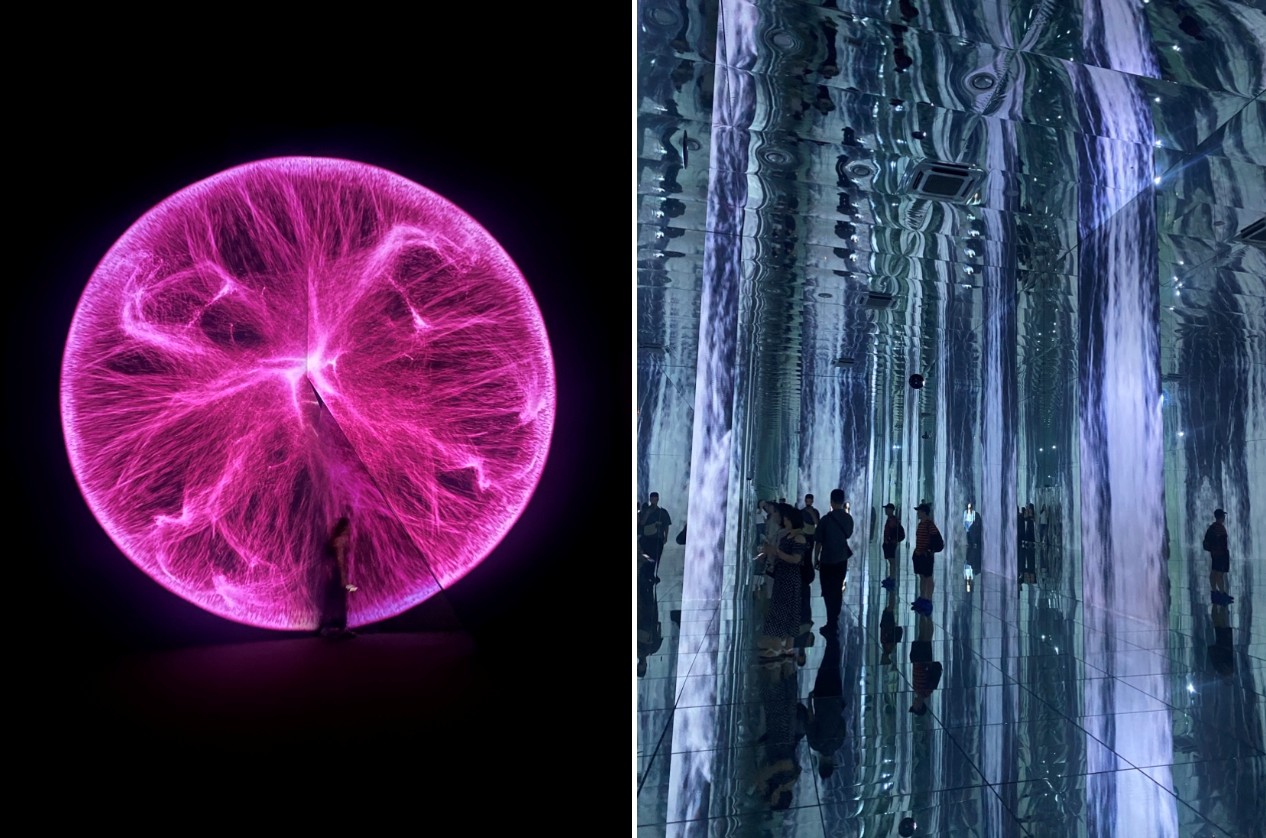
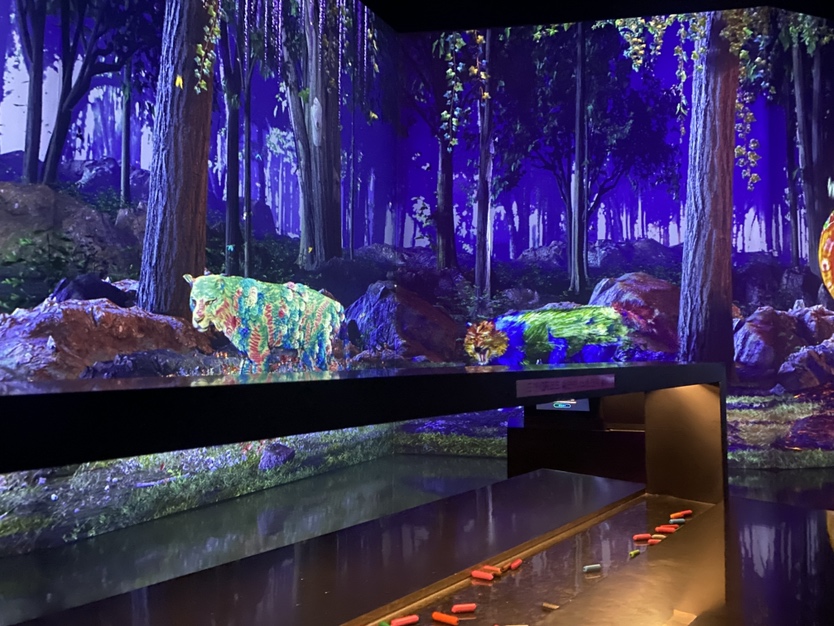
(Left) CIRCLE, (Right) WATERFALL INFINITE, Arte Museum Busan. (left) / LIVE SKETCHBOOK at JUNGLE, Arte Museum Busan. Visitors’ drawings are scanned and appear animated in the video jungle. (right)
After a short break at P.ark Café, I crossed the street to reach Arte Museum Busan. I booked an ARTE Museum Busan ticket on Time Ticket for 16,000 won, by applying the 3,000 won discount coupon (Adult, Weekday). Opened in 2024 as the fifth domestic branch, this immersive space reinterprets Yeongdo’s mountain-and-sea identity through contemporary media art. The Eternal Nature exhibition features 19 works across 14 spaces, combining stunning visuals, sound, and scent that captivate the senses. In collaboration with the chief perfumer from France’s Grasse Institute of Perfumery (GIP), distinct scents were created for each space, harmonizing with the vistas and evoking feelings of tranquility, wonder, and faint memories in viewers. The exhibition space extends beyond mere “viewing” into “an experience of lingering.”
The JUNGLE section features glowing plants and animals, evoking scenes from Avatar. When visitors draw animals and project them onto the screen, their creations come to life, causing children to cheer and adults to smile, transporting them back to their childhood days. It has become a space where anyone, regardless of age or gender, can fully engage with the artwork—not just appreciating it, but interacting with it directly.
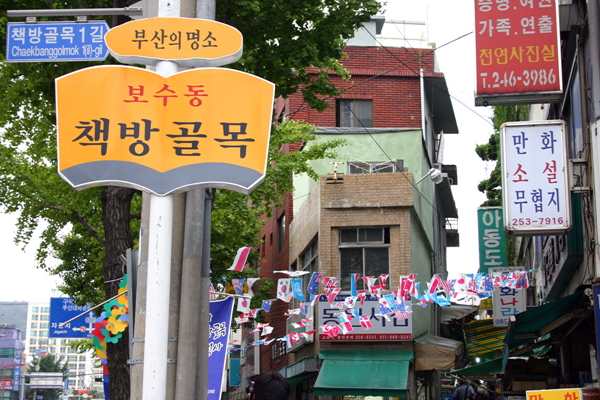
Bosu-dong Book Street
After visiting the exhibition in Yeongdo and exiting at Jagalchi Station, you naturally pass through Gukje Market on the way to Bosu-dong Book Street. Once known as “Little Japan,” the market remains a unique spot—less bustling than before, but still intriguing for tourists and nostalgic for locals. Traces of the past linger amid the vitality of old shops and merchants. Bosu-dong Bookstore Street began in the 1950s as a place where war refugees bought and sold used books. Today, as small bookstores become rare, strolling here evokes more than just an appreciation for books. The musty scent of old paper and the texture of worn covers convey the weight of time, while the narrow alleyways and aged signs hold the city’s fading memories. Notably, Alpha Bookstore specializes in rare, vintage art books, making it a must-visit for art enthusiasts.
As full-scale occupancy in Myeongji International City improving transportation, bus routes from downtown Busan to the Busan Museum of Contemporary Art have become much more convenient. I used the bus for this trip as well. The Busan Museum of Contemporary Art hosted a large-scale retrospective of Swedish artist Hilma af Klint, Hilma af Klint: Proper Summons, featuring 140 works previously exhibited in Tokyo. I applied the exhibition discount coupon on Ticketlink, booking an adult ticket for 7,000 won(regular price 10,000 won). The exhibition comprised seven sections, guiding viewers through the artist’s journey—from early nature observation works and bold abstract experiments to later watercolors. Her work gained art-historical significance by showing she experimented with abstract forms before Kandinsky and Mondrian, pioneers of abstract art. Following her work chronologically, I was deeply absorbed in a world reflecting nature, the cosmos, the soul, and life’s cycles. The exhibition’s highlight is a series of ten large-scale paintings from 1907. Within the unprecedented scale and intuitive form, human life is depicted as a flow through four stages: birth, childhood, maturity, and death. Seated in the exhibition space and viewing the series in sequence, viewers become immersed in her artistic world.
After wrapping up my final exhibition in Busan, I grabbed a quick dinner at the popular local spot, Kimgane Gaya Milmyeon, near Gimhae Airport. A bowl of chewy, savory noodles was the perfect way to end the journey, offering a brief respite.
On the way home, t, I encountered the public art exhibition Closer to Nature, Closer to Art, a collaboration between Korea Arts Management Service and Korea Airports Corporation. Displayed on the second floor of Gimhae Airport’s domestic terminal, the exhibition showcased emerging artists. The space transformed the airport’s everyday setting into something special, filling the final moments of the journey with art.
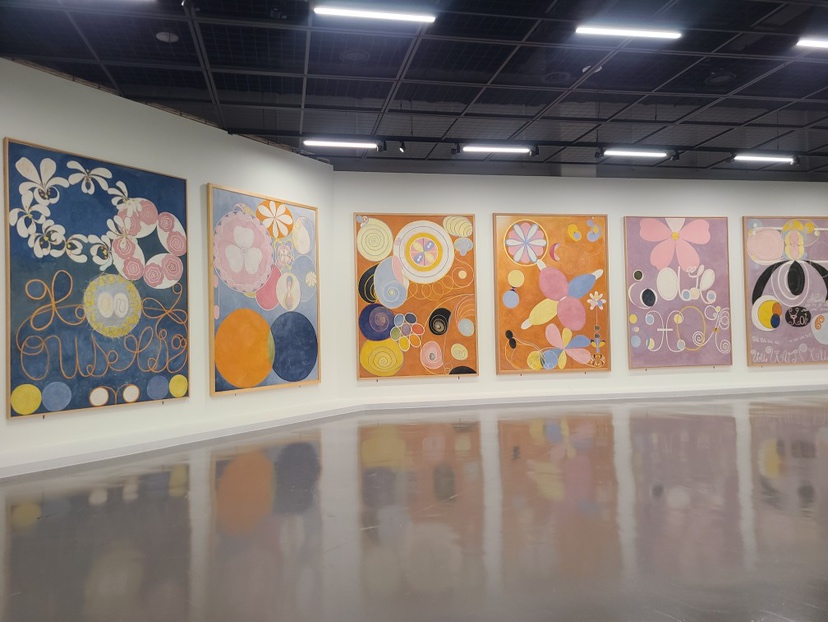
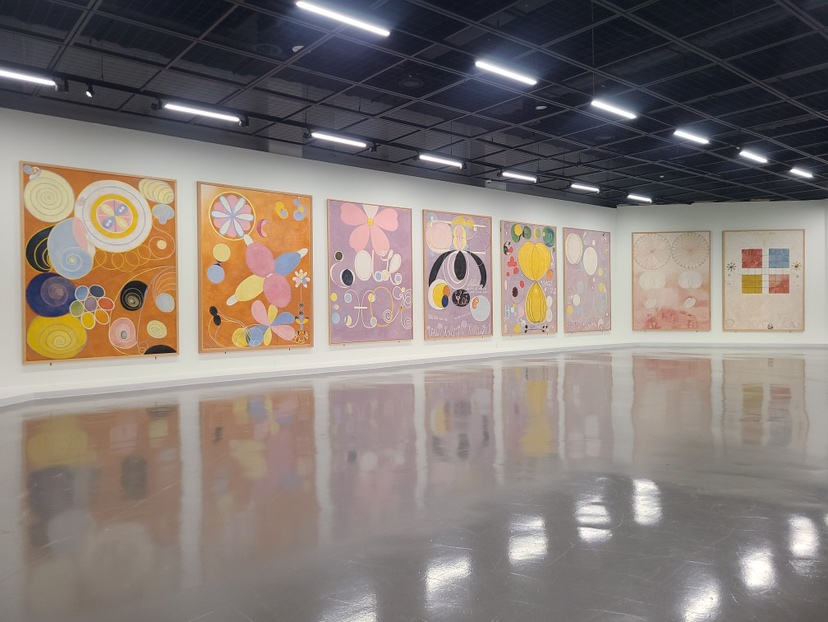
View of ten large-scale paintings from Hilma af Klint: Proper Summons, Busan Museum of Contemporary Art.
As autumn deepens, exhibition news continues to spread across the nation. This journey reminded me of how art permeates our lives, creating small but meaningful resonances. I plan to keep visiting exhibitions in the second half of the year and make the most of the remaining discount coupons. If you missed the first round, grab the second coupon, which will be distributed on September 25, and enjoy the upcoming exhibitions.
from | Director of MUHA
She has worked in Korean art market statistics and the international promotion of Korean art, and now focuses on writing about global art trends and consulting in the cultural and arts sector.