Official Website: k-artfestival.com
Instagram: @koreaartfestival
Hosted by: Ministry of Culture, Sports and Tourism | Organized by: Korea Arts Management Service
September 1 – 30, 2026 | Major Cities Nationwide
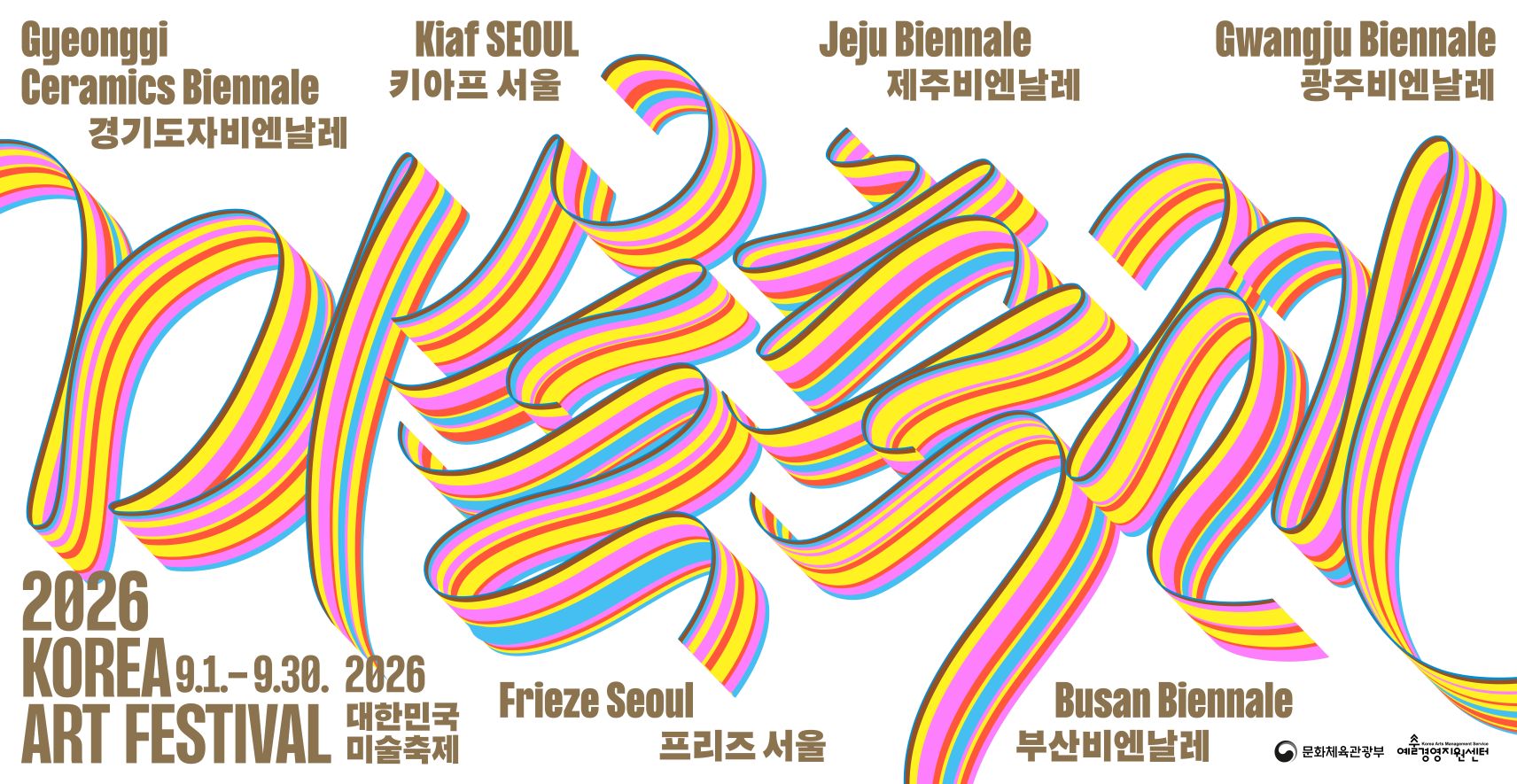
During the month of September, the 2026 Korea Art Festival is taking place at a nationwide scale. The festival, which is organized by the South Korean Ministry of Culture, Sports and Tourism (MCST) and the Korea Arts Management Service (KAMS), is not simply one event happening in a single location. It exists as a unified platform bringing together major nationwide art events such as the Gwangju Biennale, the Busan Biennale, the Jeju Biennale, Kiaf Seoul, and Frieze Seoul and introducing local exhibitions and art institutions. The program that is drawing special attention this year is an “Art Journey” traveling to different art environments outside of Seoul. The journey is free of charge and was designed to connect two or more local art museums, galleries, and biennials and allow participants to see the regions’ art and culture while traveling with a docent.
I. From museum to city
Art journeys begin with travel. What station a train stops at, what side street a bus turns onto, and what path you walk along after leaving the museum become part of the experience associated with the exhibition. We do not simply interpret artwork inside the gallery—we also look at the city in which it is located. A total of eight courses have been organized from Gyeonggi Province all the way to Jeju Island, weaving together the art museums, galleries, and biennials in each region. These were devised so that participants could experience the local art ecosystem together with the cityscape.
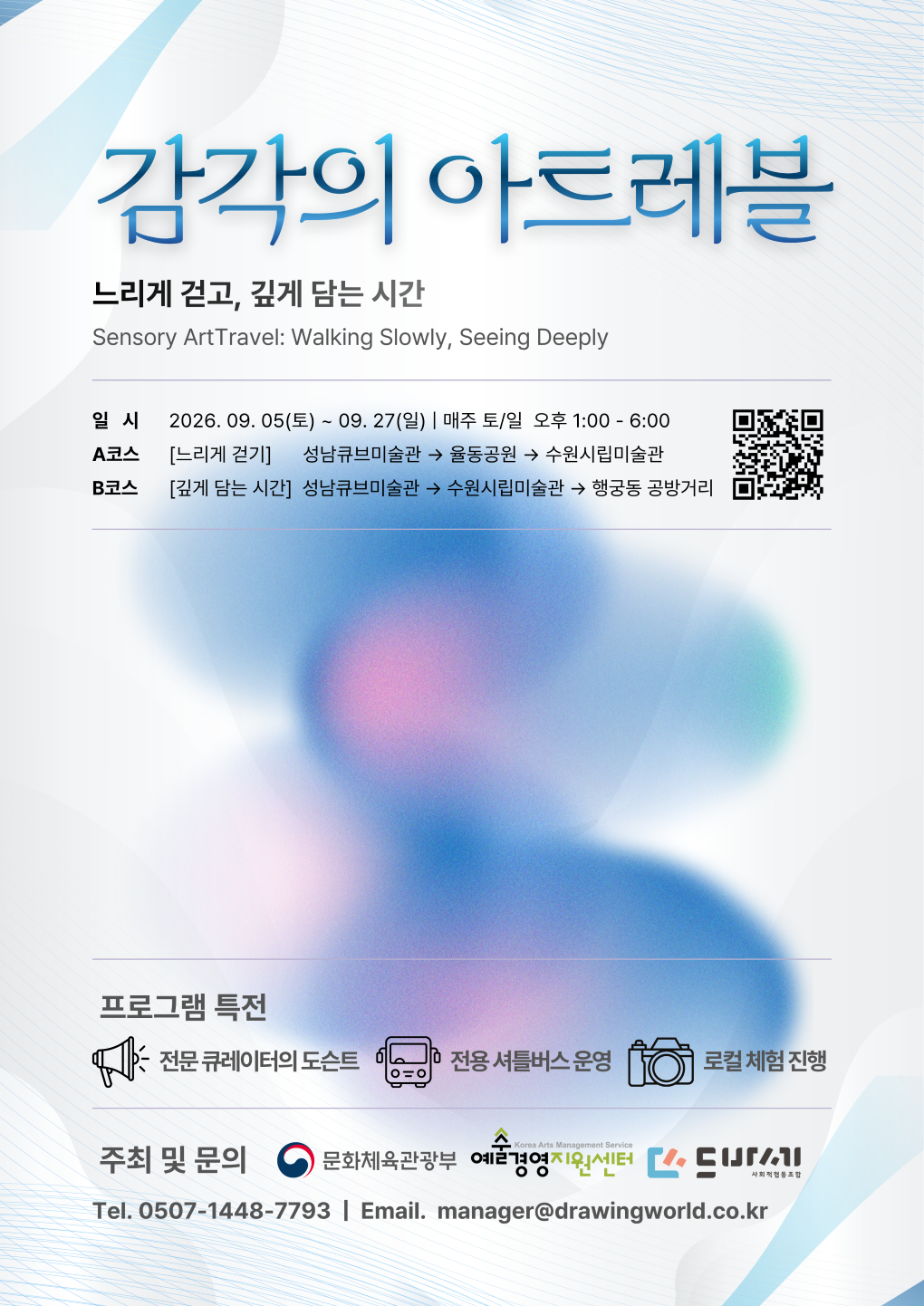
Let’s start somewhere close to Seoul. Sensory Art Travel: Walking Slowly, Seeing Deeply, which links Seongnam and Suwon in Gyeonggi Province, brings together the art museum and the park. After viewing an exhibition at the Seongnam Cube Art Museum, participants walk through Yuldong Park and travel to the Suwon Museum of Art or the “studio street” in the city’s Haenggung neighborhood. As they step outside the gallery and take a walk in the park, the artwork becomes more than just an independent image. The colors and forms that the viewer just saw reemerge amid the trees and buildings and the movements of people. This is a chance to think about the exhibition again while traveling through the city.
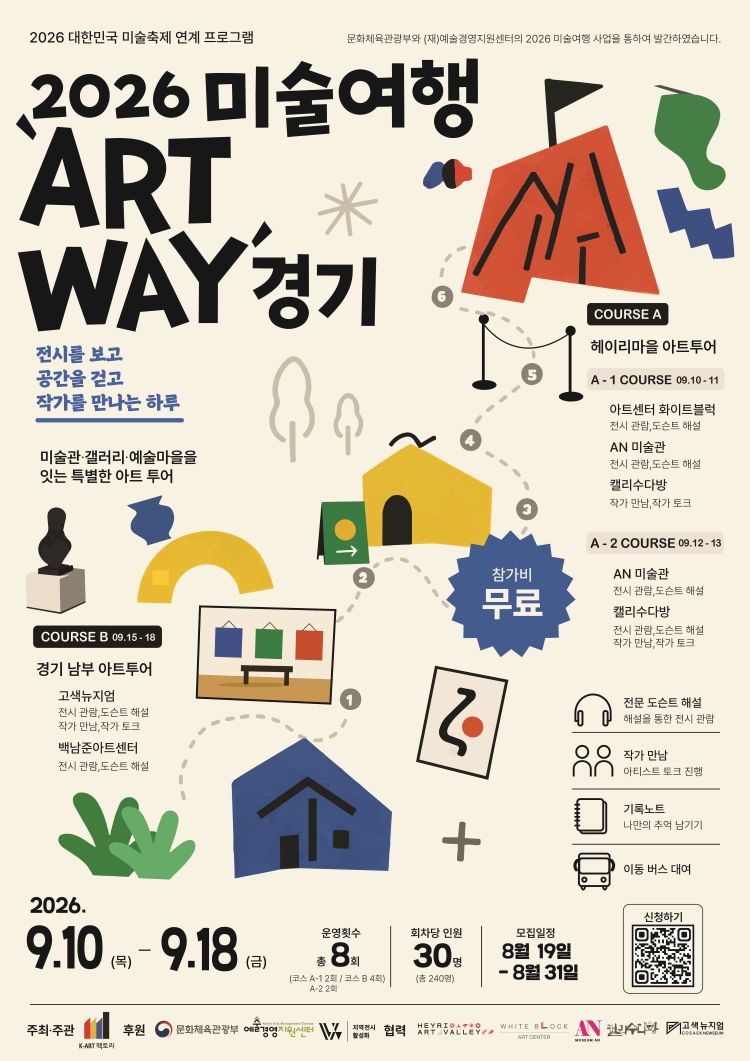
ART WAY Gyeonggi: 2026 Art Tour, which takes place in Paju and Icheon, takes participants beyond the gallery into the artist’s studio. As they make their way through places like Heyri Art Village and its exhibition spaces, Gosaek New Museum, and Icheon Pottery Village, they get to look inside the places where creation happens. A workshop is a space that relates more to processes than to results. In them, visitors can see the materials and tools of creation, the unfinished works, and even the occasional evidence of failure. If the artwork in the gallery is viewed as a completed object, the studio allows the viewer to imagine the conditions of creation.
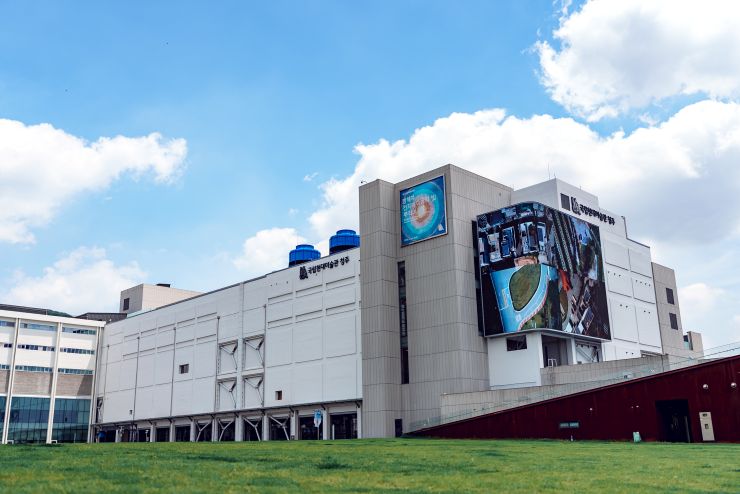
MMCA Cheongju
2026 Chungcheong Art Trip – Exhibition-Linked Art Tour takes place in Cheongju and Sejong. This journey takes viewers through the Cheongju Early Printing Museum and the Cheongju branch of the National Museum of Modern and Contemporary Art, Korea, to places such as Jochiwon Cultural Garden, Bugang Cathedral, the Hong Sun-hyeong House, Ieung Bridge, and the Geumsu neighborhood. It begins with the early printing techniques and takes the viewer from there to see contemporary art, architecture, and cityscapes. As participants follow the traces of different eras, they discover the art is not something that lives in galleries alone—it carries on through the moments and memories of a city.
II. Between the global and local
Those willing to travel a bit farther can board the KTX high-speed train bound for Gwangju. The journey titled Glocal Gwangju, Art Edge: Connecting Global Discourse and Local Creativity is centered around the 16th Gwangju Biennale. After seeing exhibitions there, participants pass through the Gwangju Museum of Art and Gwangju Art Street to arrive in the Yangnim History and Culture Village. Along the way, they encounter the spaces and works of local artists. A day that began with global art discourse finished amid the scenery of local history and everyday life. Biennials are often viewed as mechanisms for bringing together and displaying contemporary art from different regions of the world. But as participants walk together through the biennial’s host city, the concept of “contemporary” takes on a more concrete aspect. The images from the galleries, the side streets of Yangnim, the old structures, and the workspaces of local artists come together across different timeframes to form a single landscape. Global art and local reaction are placed together along a single travel route. This course offers a different approach to the “art journey.”
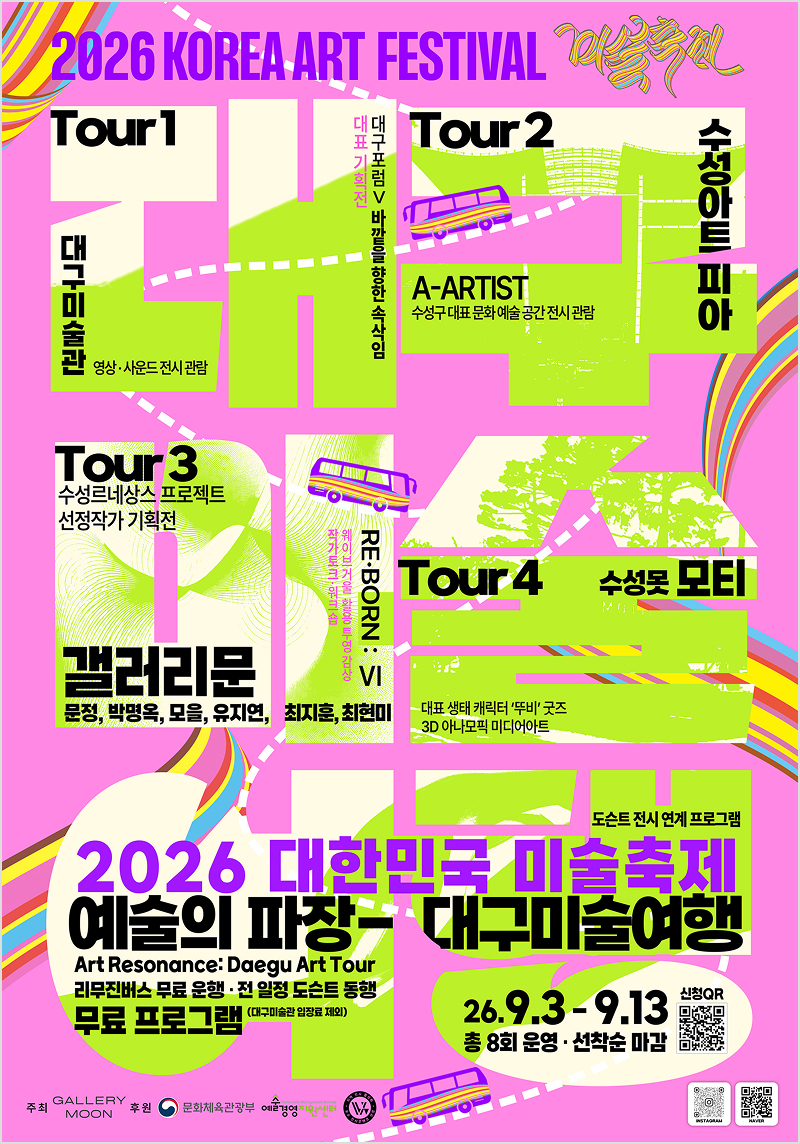
In Daegu, the traveling can be found in the very way the artwork is viewed. Art Resonance: Daegu Art Tour starts at the Daegu Art Museum and travels to Suseong Artpia, Gallery Moon, and the MOTII Media Art Space. The journey is organized so that viewers can encounter sound art, paintings, mixed media, and media art by world-class artists. Some of the works require them to listen; others ask them to follow an image’s movements. The different genres of art call upon different senses. Rather than remembering Daegu for a list of art museums, participants will recall the distances between spaces and the things experienced along the way.
In Busan, the city’s topography becomes part of the art journey. The Sea of Transformation and Resonance begins with a viewing of the 16th Busan Biennale at the Museum of Contemporary Art Busan, followed by a trip to the old city center. Participants board a charter bus to see the old downtown’s history and places, encountering the creations of local artists at the gallery TOTATOGA before wrapping up the program at the Donggu Cultural Platform. This course was also selected for an art journey program as part of a 2026 local exhibition promotion effort. The expansive galleries of Eulsuk Island and the side streets of the old city center offer contrasting versions of Busan: one a setting for international art and the other a place where local lives and creations have become layered with time. The sea, port, old buildings, and new cultural spaces are things that participants will remember alongside the artwork.
In Jeju, the inside and outside of the art museum become even harder to tell apart. Talking Museum links galleries with the Jeju Museum of Art, art spaces, and Jeju Stone Park. Another course is titled Wind-Held Architecture, A Self Found in Jeju visits the Water Wind Stone Museum, Podo Hotel, Bangju Church, and the Yoo Dong-ryong (Itami Jun) Art Museum. On this journey, the architecture is not a mere backdrop for the artwork—it is an object of appreciation in its own right. The natural environment is more than a landscape outside the gallery; it is a prerequisite for experiencing the work. The wind and light of Jeju Island, the stone and water, and the distances between structures combine to offer a special sensory experience.
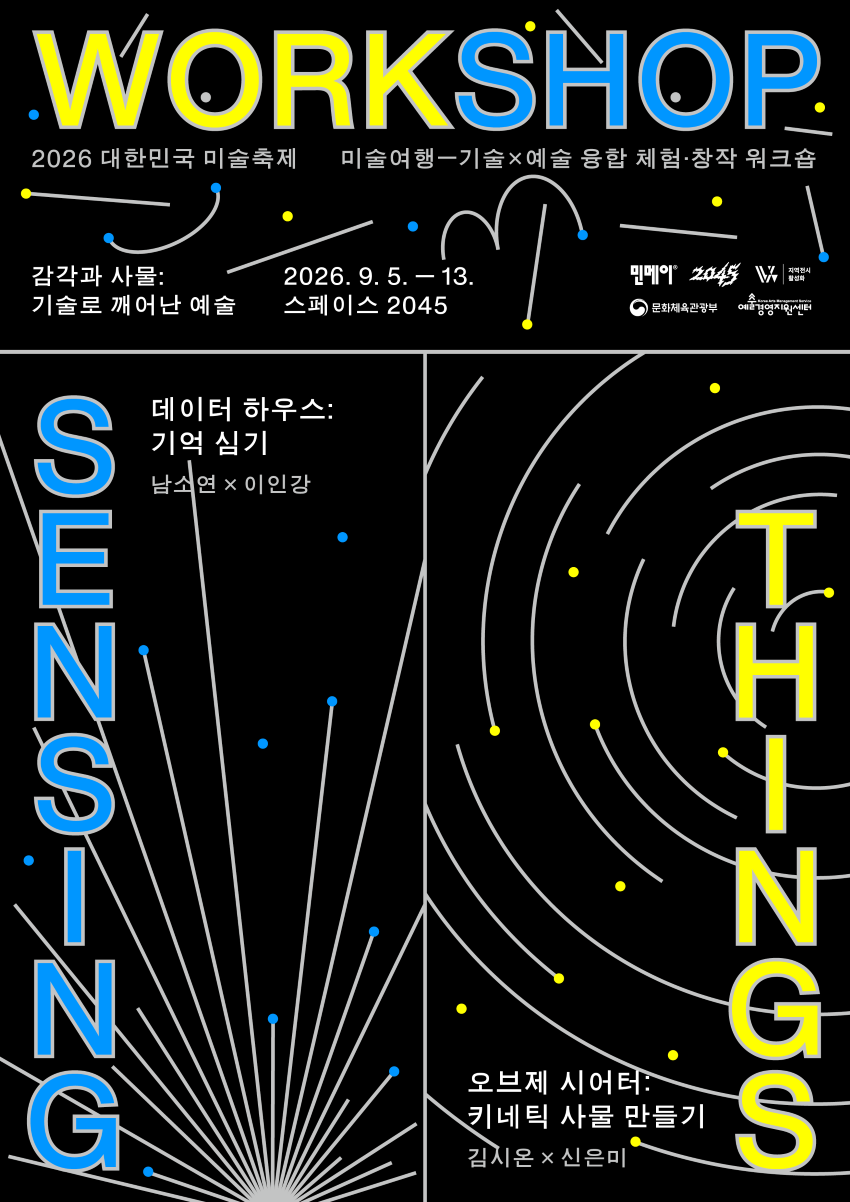
Also not to be missed is visual artwork on the theme of “art meets technology.” In Dangjin, the journey Sensing Things uses digital devices to visualize assembled regional data and resident memories. In Wonju, Jeolla Province, the journey 2026 Again Sansuyuram uses AI technology and sounds in the natural environment of Daedun Mountain to offer an unusual encounter with local scenery and art.
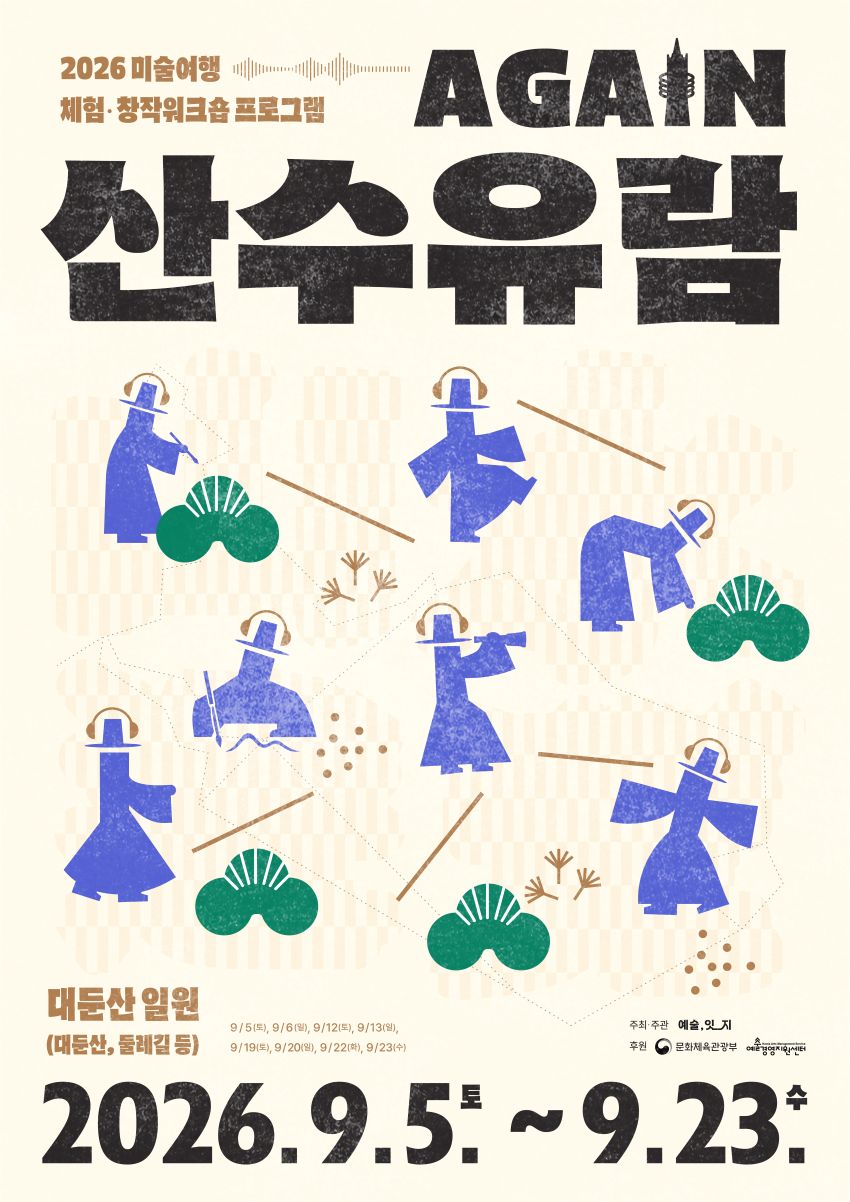
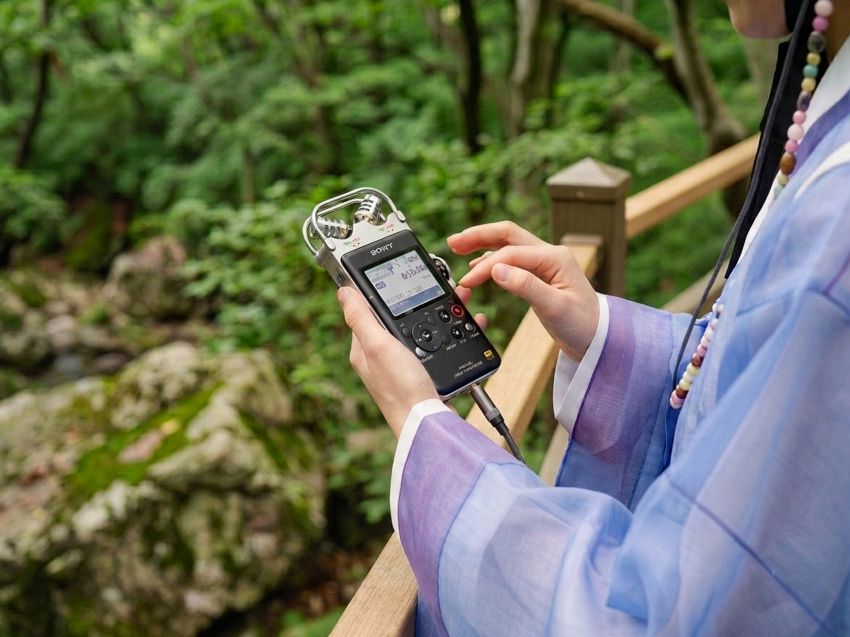
Sound Sansuyuram: Workshop for Transforming Audio Recordings into Soundscapes
III. Art at the airport
Another fascinating destination in this year’s art festival is the airport. Normally used for passengers arriving and departing, they are transformed here into galleries. The 2026 Korea Art Festival’s Airport Exhibitions are a program in which the MCST and KAMS collaborate with international airports in Incheon, Gimpo, and Gimhae to present work by Korean artists. Viewing art in an airport is a different experience from an art museum. The people looking at the work are not visitors who have come to see it, but people who are passing through on their way to somewhere else. As travelers pause with their carriers, their eyes shift from the departure times to linger on the canvas. Rather than a special destination, art becomes part of the process of movement.
SHAPE OF NATURE / SHAPE OF LIFE, which was organized by the CAN Foundation, runs through November 14 in the Millennium Hall at the center of Incheon International Airport’s Passenger Terminal 1. Six artists—Oh Youkyeong, Kim Bohie, Jeong Dahee, Kim Youngjun, Park Jaebeom, and Hahm Heeyoon—present work that focuses on the relationships of nature, human beings, and life. As passengers await their departures, they pause before the large LED screens. In the same airport’s Passenger Terminal 2, Pale Blue Dot, 2247 continues through November 14, with curation by Platform A. Weaving together the future year 2247 with the “pale blue dot” of Earth as witnessed by Voyager 1 from outer space in 1990, this exhibition imagines Incheon International Airport as a “space transfer terminal” in the future. Participating artists Yang Junguk, Yeom Inhwa, Han Yoonchung, and Shin Hyoheun share seven works of kinetic sculpture, video, XR, and data visualization. In the process, they explore relationships, coexistence, future travel, and the values that human beings are bound to uphold.
At Gimhae International Airport, Journey into Calm offers a progressive exhibition through the perceptions of nature as travelers move through the building. At Gimpo International Airport, Shaping, Weaving, Lingering explores the materiality of contemporary culture and emotional collections through the works of artists Kwak Intan, Back Inkyo, and Lee Jiyen. The act of transforming an airport into a gallery does not simply boost the accessibility of art—it shares the work of Korean artists with travelers and overseas art world figures visiting the country, while showing that art is not something experienced solely in the institutional space of the art museum. In this festival, the airport is both the point where the travels begin and the final gallery that people meet when their art journey ends and they are ready to return to everyday life.
IV. September: Which city will it be?
The significance of the 2026 Korea Art Festival is about more than simply making a list of nationwide art events. It is about bridging galleries and cities in different settings and creating pathways in between them. Images of artwork are not the only lasting memories of these art journeys. People will remember the scenery outside the train window on the way to a museum, a bus taking them to the next gallery, the materials in an artist’s studio, and a cup of coffee after an exhibition viewing. The memories encompass the times and places surrounding the artwork and the experience of movement. Visitors may arrive in a city to see art, but they end up viewing that art in a new way through that city. Such is the magic of an art journey.
Jaeseok Kim
from | Director of xlarge
Director of xlarge. From 2010 to 2019, they served as a staff writer and editor-in-chief for 『Art in Culture』, a magazine specializing in art. Subsequently, until 2023, they worked as the creative director at Gallery Hyundai, curating and directing numerous exhibitions. In 2025, they founded xlarge—a space based on the concept of a home gallery—where they continue to curate exhibitions and discover emerging artists. They curated the inaugural exhibition 《UnHouse》 at Frieze House Seoul in 2025 and remain active in various roles, including moderating talks on contemporary Korean art and editing exhibition-related publications.