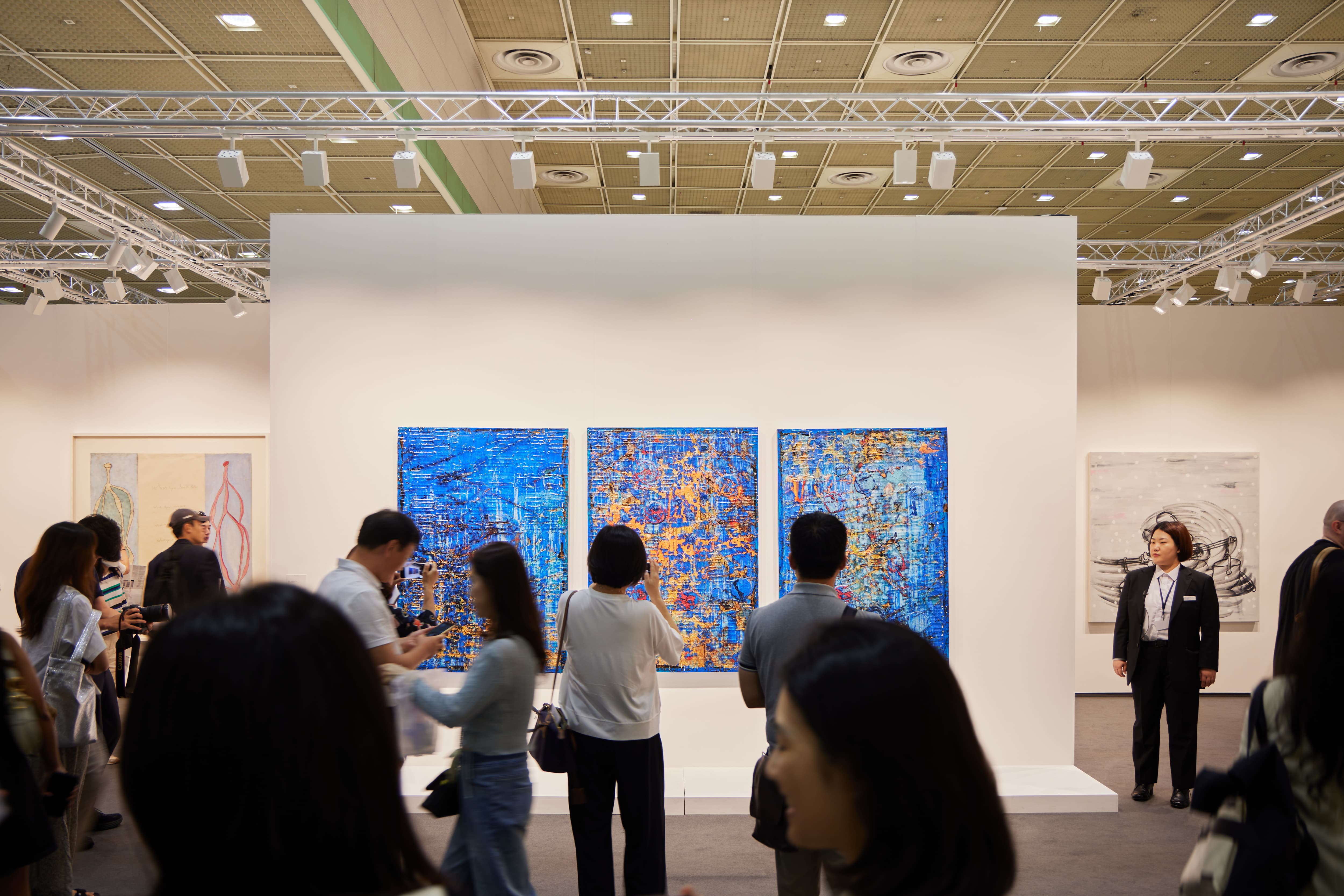
Figure 1. Mark Bradford, Okay, Then I Apologize, 2025, Canvas on mixed media, Each 104.8×150.5cm, HAUSER&WIRTH. Ⓒ WeCapStudio.Courtesy of Frieze. (LEFT) /
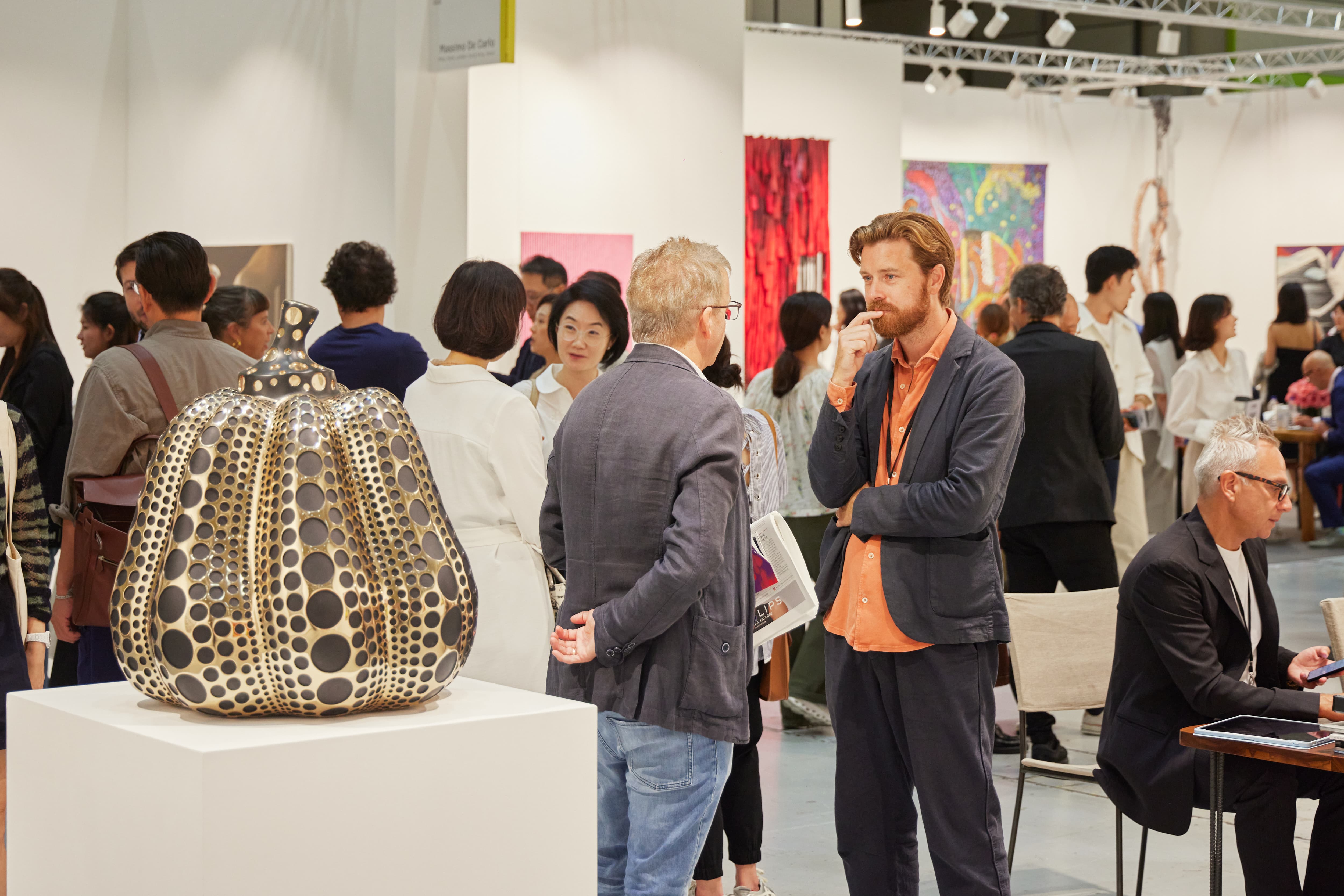
Figure 2. Installation view of David Zwirner’s booth at Frieze Seoul. Ⓒ WeCapStudio.Courtesy of Frieze.
Achievements and Challenges of Kiaf and Frieze Seoul
I. Kiaf and Frieze Seoul: Joint Endeavors and Achievements in 2025
Every autumn, leading institutions, galleries, collectors, and art enthusiasts from around the world flock to Seoul as if by mutual agreement. 2025 marks the fourth consecutive year that Frieze Seoul and Kiaf Seoul (hereafter Frieze and Kiaf) have been held together.1) The 24th Kiaf ran from September 3–7, and the fourth Frieze from September 3–6 at COEX. Frieze presented 121 galleries from 28 countries, and Kiaf 175 from 20 countries. Kiaf reduced its number of participating galleries from last year’s 206, signaling a strategy focused on quality over quantity. Kiaf included over 50 overseas galleries out of 175, while Frieze featured around 30 domestic galleries out of 121 — suggesting an effort to balance the two fairs.
Despite the pandemic, the Korean art market has thrived over the past four years. When Frieze Seoul debuted in 2022, young affluent Asian collectors attended in large numbers. Contrary to fears that Frieze might overshadow domestic fairs, Kiaf, previously exclusive to Korea, partnered with it to attract overseas collectors. This seemed to mark the start of Korea’s emergence as Asia’s art hub in recent years.
However, no sector is more directly affected by economic conditions than the art market. Despite concerns that this year’s art fairs might underperform due to the economic downturn, the results defied expectations. Fortunately, both fairs defied expectations and achieved excellent results on par with previous years. Frieze welcomed around 70,000 visitors, matching last year’s figure, including representatives from more than 160 leading museums and institutions.2) Hauser & Wirth, a global gallery from Switzerland with branches in London, New York, Paris, and Hong Kong, sold Mark Bradford’s Okay, Then I Apologize (2025) for 6.26 billion won—a record price at Frieze Seoul. During Frieze, solo exhibitions were held for Hauser & Wirth exclusive artists: Louise Bourgeois at Kukje Gallery, Lee Bul at the Leeum Museum of Art, and Mark Bradford, whose first solo exhibition in Korea, Mark Bradford: Keep Walking, is at the Amorepacific Museum of Art. In doing so, Hauser & Wirth has consolidated its position in Korea by promoting its gallery and artists in various ways. Hauser & Wirth also sold George Condo’s new Purple Sunshine (2025) for about 1.67 billion won, and two Louise Bourgeois drawings for around 1.32 billion won each. Perrotin sold Takashi Murakami’s Untitled (2025) for 840 million won, while Thaddaeus Ropac acquired Georg Baselitz’s Es ist dunkel, es ist (2019) for approximately 2.9 billion won, and White Cube sold Baselitz’s Erstens, bitte schön (2014) for around 2.1 billion won. Both Western mega-galleries and major domestic galleries achieved strong sales. Notably, domestic galleries have successfully sold works by Korean artists alongside renowned international artists at high prices. Hakgojae Gallery, in the Frieze Masters section, sold Whanki Kim’s Cloud and Moon (1962) for 2 billion won during the opening. Kukje Gallery sold works by Chonghyun Ha for 140–380 million won, while Gallery Hyundai sold a Sanghwa Chung piece for about 830 million won and a steel sculpture(1981) by Korean-American sculptor John Pai for 420 million won.3)
With notable participation from Asian galleries, their sales at this year’s Frieze were also substantial. Asia Art Center sold works by CHU Weibor and YuYu Yang, each priced around 139 to 208 million won, while Kotaro Nukaga sold two Yu-ichi Inoue ink works for about 139 million won and 125 million won. ThisWeekendRoom, making its Frieze debut, sold its works by young artists including Jinhee Kim, Jiwon Choi, and Seoul Kim. Patrick Lee, Director of Frieze Seoul, remarked: “Strong sales from the opening and sustained engagement of visitors and collectors throughout the week reaffirmed Seoul’s role as a key hub in the global art scene.”4) Frieze 2025 highlighted the positive outlook for the Korean art market, with consistent sales not only from established Western galleries but also from those steadily building their presence in Asia.
Meanwhile, Kiaf 2025 introduced the theme “Resonance” as its inaugural theme, aiming to position the event as a platform where art professionals connect and collaborate. Kiaf stated that it limited the number of participating galleries to 175 through a rigorous selection process, creating a more refined viewing environment. This event attracted over 82,000 visitors, with strong sales across high-, mid-, and low-priced works. Sunghoon Lee, President of the Galleries Association of Korea, commented: “This year, the works by artists from diverse generations and backgrounds were brought together, and the active participation of the younger generation was especially encouraging.”5) Among major domestic galleries, Kukje Gallery sold Seobo Park’s Ecriture for around 400 million won and the entire series of Ugo Rondinone’s Color Mountain sculptures, while Gallery J.ONE sold a piece by Barbara Kruger for about 500 million won. Gana Art sold a work by Chiharu Shiota for about 320 million won; Gallery Hyundai sold a Tschangyeul Kim piece for around 200 million won; PYO Gallery sold five works, including one by Tschangyeul Kim and a 10-ho canvas by Seobo Park (approx. 53 × 45.5 cm); and Sun Gallery sold a range of works, including Chungji Lee’s 200-ho canvas (approx. 162 × 130 cm) for about 160 million won.6)
Since its 2024 edition, Kiaf has distinguished itself from Frieze by promoting Korean artists across modern and contemporary art. Initiatives such as Kiaf PLUS and 2025 Kiaf HIGHLIGHTS provided support to emerging artists, while the fair also featured a variety of attractions, including Reverse Cabinet, an exhibition celebrating the 60th anniversary of Korea–Japan diplomatic ties, talk sessions, a special exhibition at Incheon International Airport, and collaborations with Media Art Seoul.
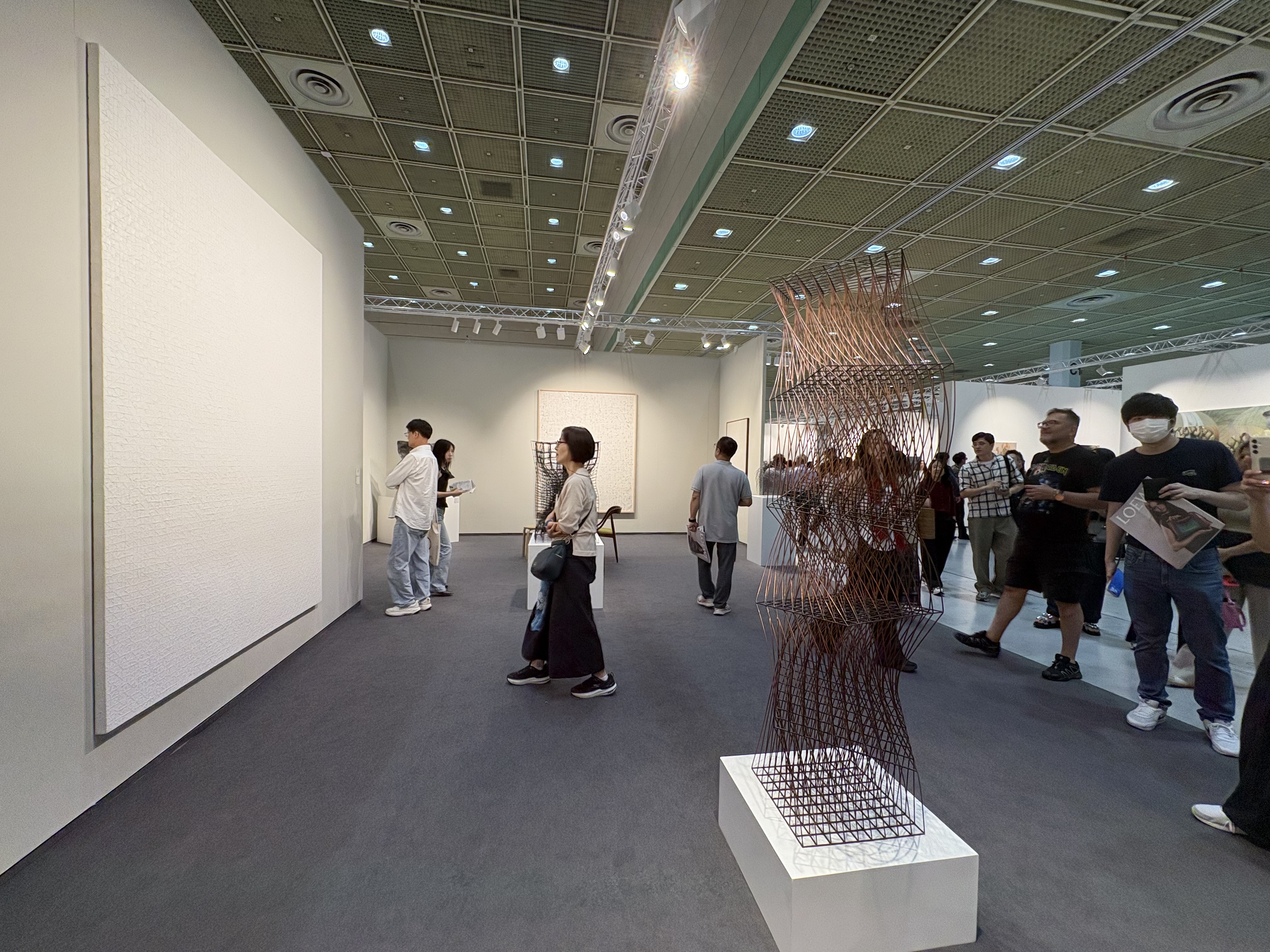
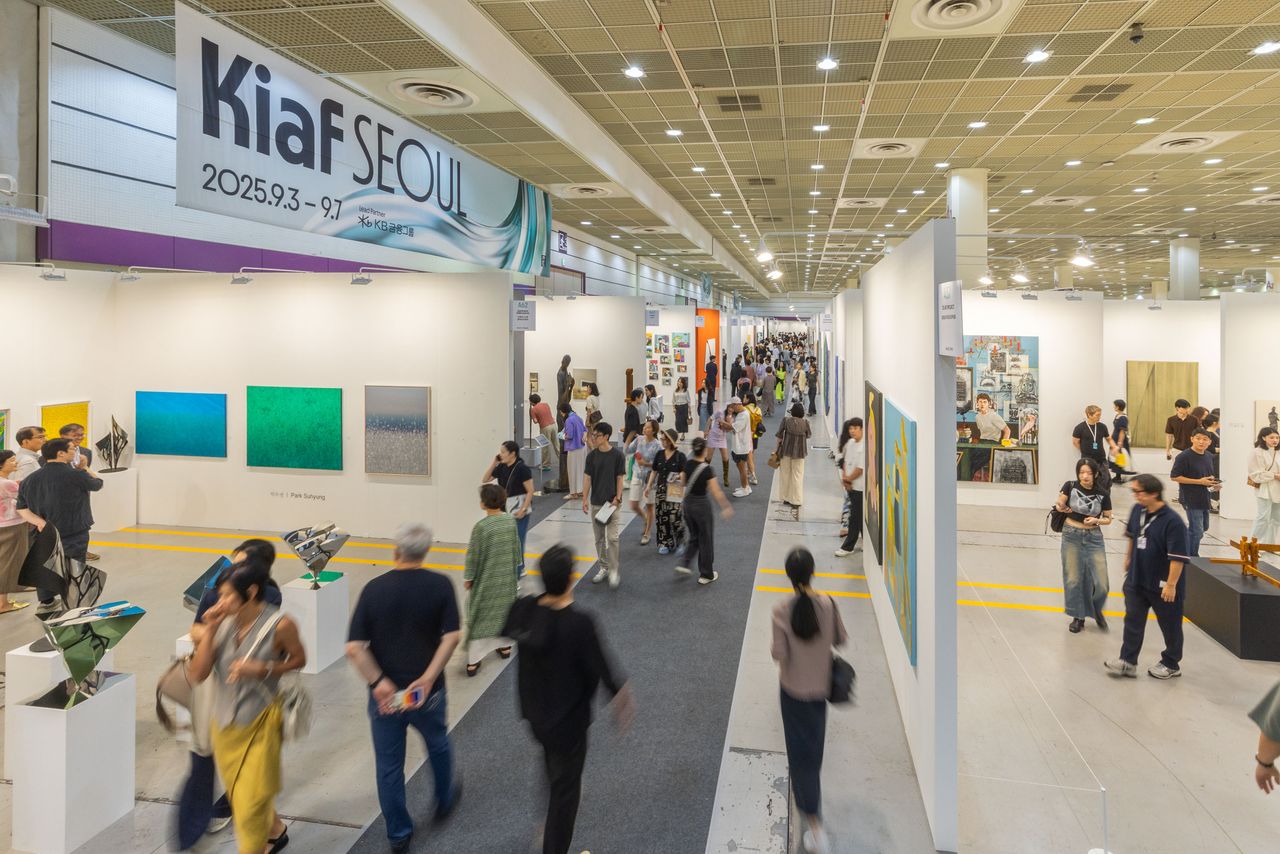
Figure 3. Installation view of Gallery Hyundai’s booth at Frieze Seoul. Ⓒ Hayeon Yum (LEFT) / Figure 4. Kiaf Seoul venue. Ⓒ Kiaf Seoul (RIGHT)
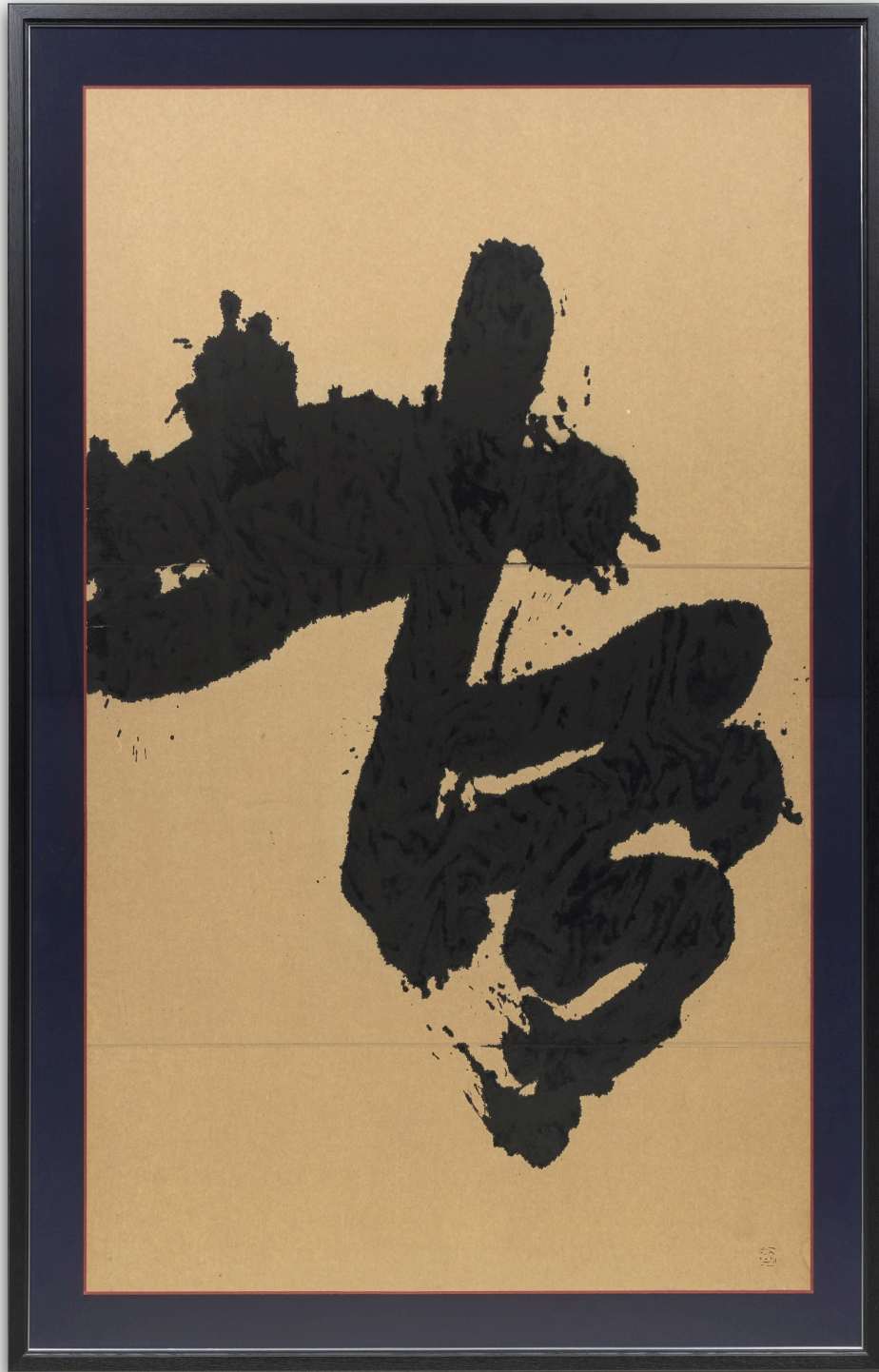
Figure 5. Inoue Yuichi, 孝 / Kō, 1961, Ink on Japanese paper, 152×97cm, Kotaro Nukaga,
Ⓒ viewingroom.frieze.com
II. The Rediscovery of Asian Galleries
What stood out most at Frieze was the prominence of Asian galleries. Compared to last year, lesser-known Asian galleries took part in Frieze. The true appeal of an art fair lies in encountering unfamiliar galleries and new artists from "peripheral Asian countries" outside the Western sphere. The Asian galleries at Frieze 2025 provided experiences equally meaningful to encountering works by already renowned artists. While major Western galleries focus on sales, galleries such as Hong Kong’s Kiang Malingue, de Sarthe, Singapore’s STPI, Japan’s Kotaro Nukaga, Take Ninagawa, Taka Ishii Gallery, Taro Nasu, Tomio Koyama, CON_, Antenna Space from Shanghai, and The Drawing Room from Manila, Philippines, made a strong impression with fresh works and unique curatorial visions.
Amidst the riot of color and the bustle of visitors, Yuichi Inoue's striking calligraphic works, presented by Kotaro Nukaga, drew attention in the Frieze Masters section. Could this be due to the survival crisis facing calligraphy in Korea? The artist's deconstruction of traditional Eastern brush techniques, encapsulating the act of writing and the sensibility of letterforms within "one-character calligraphy," effectively demonstrated the distinct nature of Asian traditional art to collectors and visitors worldwide. Taiwanese artist Tseng Chien-Ying's works, presented by Hong Kong’s Kiang Malingue, drew attention for blending personal themes with Buddhist iconography. Tokyo-based emerging artist, Yokote Taiki, named as one of Frieze's Five Emerging Artists to See at Frieze Seoul 2025, stood out with his installation among the many pieces. In the Focus Asia section, Tokyo's emerging gallery CON_ presented an installation that seemed to have brought his studio directly into the fair. The work consists of pieces of reinforced concrete from the artist's student studio, suspended in the air with magnets. It stood out for its staging, where fragments of discarded time and space seemed to be recalled back into the present, floating through space.
The prominence of Asian galleries and artists can be attributed to the growing influence and increasing demand from Asian collectors, coupled with regional galleries securing artists and works that reflect both their cultural heritage and contemporary significance. The rise of Asian galleries demonstrates that their curatorial expertise has become a pivotal force within the global art market. Should this trend continue, Seoul will become a crossroads between the Western art market and the Asian art ecosystem through Frieze, serving as a stage that facilitates the strategic expansion of Asian galleries.
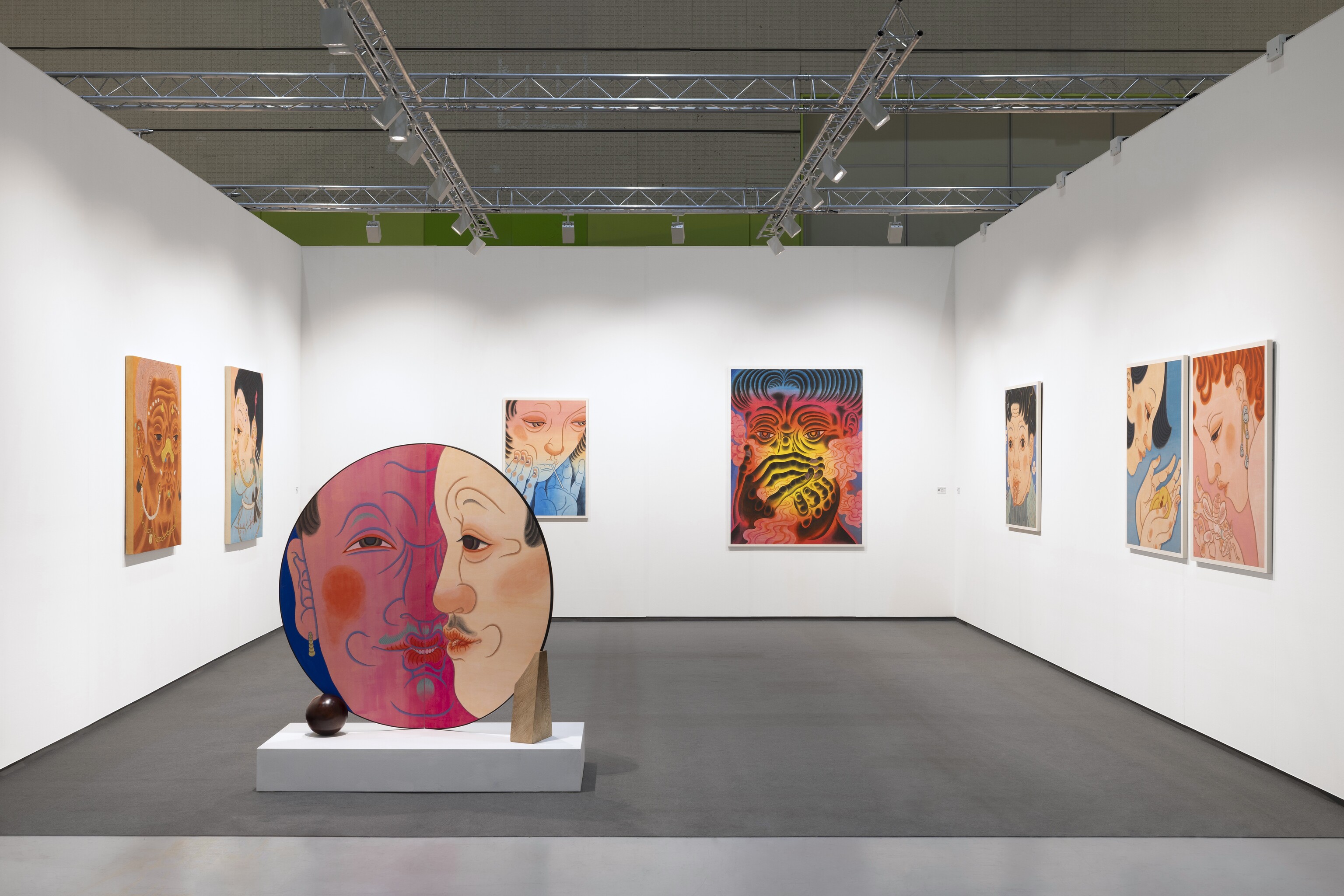
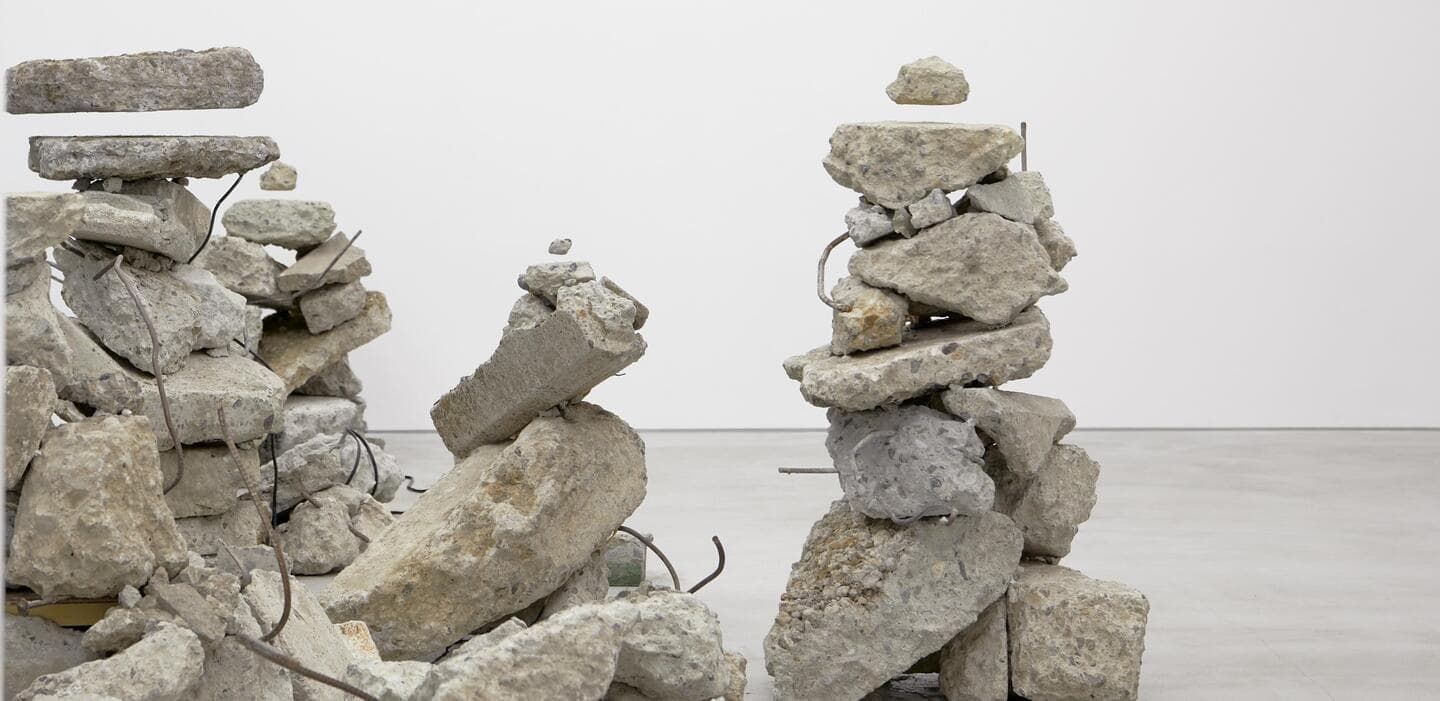
Figure 6. Installation view of Kiang Malingue’s booth at Frieze Seoul. Ⓒ Andrea Rossetti (LEFT) / Figure 7. Yokote Taiki, Floating Rubble, Zen, Gure, Coco, Sen, Po, Ten, Kuki, Kurumi (when the cat’s away, the mice will play), Reinforced concrete sculpture with magnets, variable installation, 2025. Ⓒ The artist and CON_ (RIGHT)
III. Challenges Faced by Kiaf : The Importance of Research and Curation in Korean Modern and Traditional Art
Since the joint hosting of Frieze and Kiaf in 2022, their synergy between the two has positively impacted the Korean art scene. Art enthusiasts worldwide focused on Seoul, where initiatives like the "night" program, with late-opening galleries in Samcheong-dong, Hannam-dong, and Gangnam, made art more accessible to the public as a part of cultural offerings. Alongside the surge of K-culture, global corporations have targeted the art market, and young collectors' participation has increased. The Korean art world’s challenge is to sustain this momentum over the long term and establish Kiaf's unique identity alongside Frieze, which hosts numerous global galleries. Since partnering with Frieze, Kiaf has explored new directions by creating new sections and increasing international galleries. However, this year, even major domestic galleries favored Frieze for showcasing high-value works, resulting in Frieze having a stronger lineup of galleries and artists. Although works of various prices were sold at Kiaf, the disparity between the two fairs remained evident. This phenomenon suggests that Kiaf must establish a distinct identity that distinguishes it from Frieze, beyond just visitor numbers or sales performance.
To generate synergy and establish its own irreplaceable identity, Kiaf must focus more on Korean modern and contemporary artists. Since its inception, Kiaf has aimed to promote Korean modern and contemporary art internationally. This year, galleries such as Wellside Gallery and PYO Gallery showcased works by artists including Seobo Park and Tschangyeul Kim, while established artists have already attracted attention at Frieze. For instance, Youngkuk Yoo’s works were displayed by PKM and Pace Gallery at Frieze, while Whanki Kim’s Cloud and Moon (sold for 2 billion won) was displayed at the Hakgojae booth. This suggests that Kiaf needs a more strategic approach to Korean modern and contemporary art.
In Korea, public interest in modern art—once overshadowed by contemporary and Western art—is steadily growing. Since the 2021 national tour of modern and antique works donated by the late Chairman Kunhee Lee, exhibitions of lesser-known modern art have significantly increased, attracting more visitors. Amidst these changes, gallery owners, alongside curators and researchers at museums and art galleries, must continue identifying and studying modern, contemporary, and traditional Korean artworks that lack clear context. If Kiaf systematically curates and presents these works globally, it will establish its unique identity as Korea's art fair.
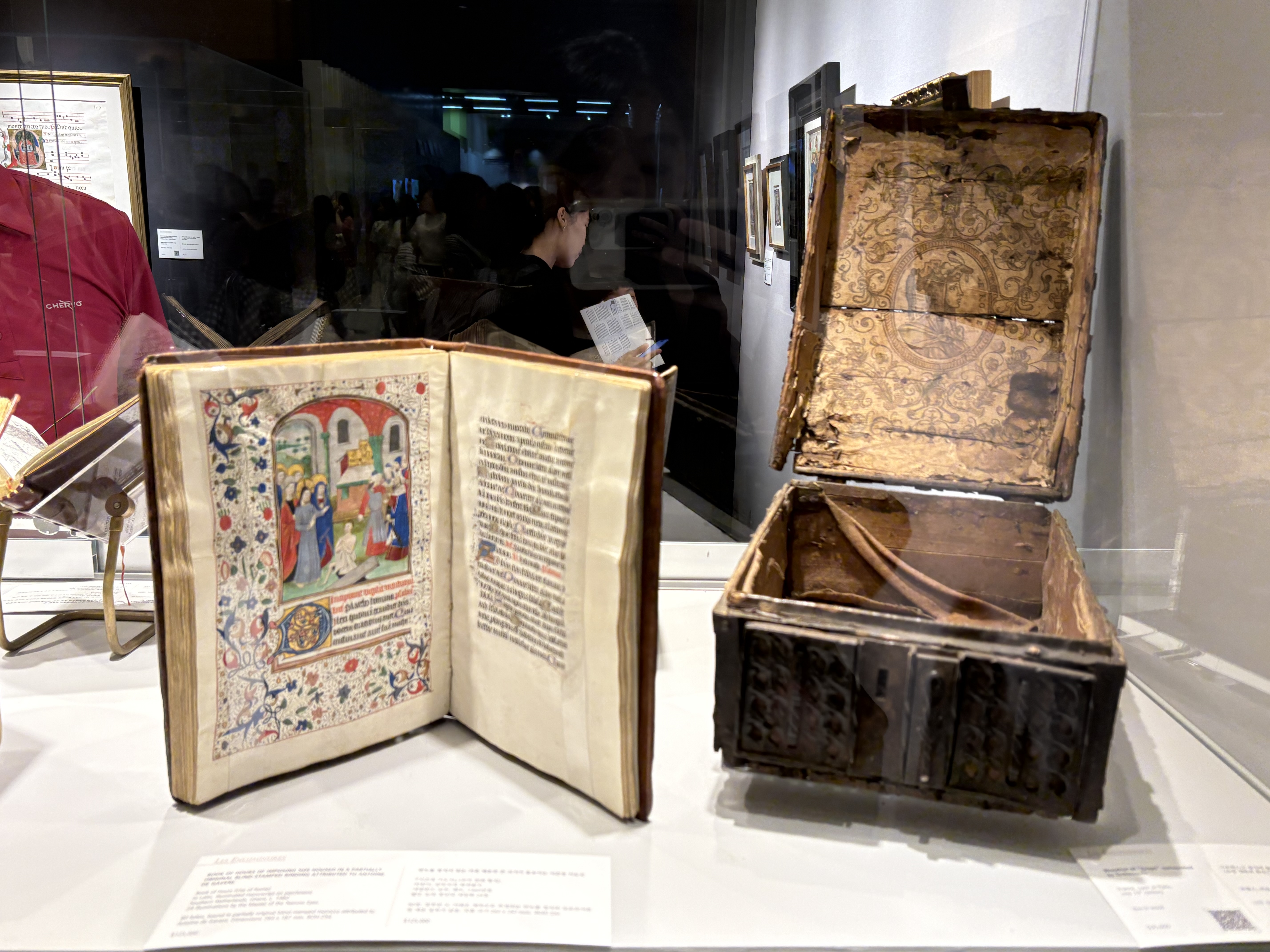
Figure 8. 『Book of Hours』, In Latin, Illuminated manuscript, on parchment with 24 miniatures by the Master(s) of the Beady Eyes Southern Netherlands, Ghent, c. 1460, 80 folios, 26×18.7cm,
Les Enluminures Ⓒ Hayeon Yum
A notable example is Les Enluminures, which participated in this year’s Frieze Masters. This internationally recognized gallery specializes in medieval and Renaissance manuscripts, miniatures, and jewelry, and has been part of Frieze Seoul since its inaugural edition.7) This year, they showcased key works such as the French medieval manuscript Le Roman de la Rose (c. 1350), the Southern Netherlands Book of Hours (c. 1460), and a Western European Emerald and Enamel Solitaire Ring (c. 1689-1720). A standout section at the inaugural Frieze Seoul was Frieze Masters, which highlighted antique art. While it garnered less attention than in its debut year, the antique art section still maintained its presence this year. The strategy of galleries that have successfully preserved and showcased their nation's unique artworks at Eastern art fairs offers valuable insight for Kiaf to consider moving forward.
To achieve this, an official platform for collaboration is essential, providing curators formal opportunities to research and showcase Korea's traditional and modern art, while engaging the public and appealing to global collectors at art fairs. Moreover, this initiative seeks to rediscover artists outside of major galleries or the mainstream, creating cracks in the established art market order. The golden age of K-culture, coupled with the rise of young Asian collectors and the growing art market, has fueled the success of art fairs. However, beneath the surface, the gap between the rich and poor continues to persist. While Korea’s art world holds valuable works with unique narratives, many remain undiscovered. As Korea establishes itself as Asia's art hub in the post-pandemic era, new content and strategies aligned with the current age are needed.
1) Launched in 2003 in London’s Regent’s Park, just a year after Kiaf, Frieze initially showcased emerging artists. With support from Deutsche Bank and IMG, the fair expanded to New York and Los Angeles, eventually becoming a global art event. In 2010, as international art fairs emerged across Singapore, Hong Kong, China, and Taiwan, Frieze turned its focus to Asia’s growing market. Among these, Korea was prioritized due to its less regulated market compared to China or Hong Kong post-COVID-19, along with a rising number of young collectors. As a result, Frieze entered Korea in 2022, becoming the first international art fair to do so. With the launch of Frieze Seoul, global attention began to shift toward Korea. Frieze and Kiaf are now contractually set to co-host through next year, marking their fifth consecutive year together.
2) Frieze Seoul 2025: Expanding Korea's Cultural Presence with Global Participation, Strong Sales and Long-Term Momentum (Seoul: Frieze Seoul, 2025), Press Release, p. 1.
3) Ibid., pp. 2–6.
4) Ibid., p. 2.
5) Kiaf Seoul 2025, Concludes Successfully with Diverse Sales and Increase in New Visitors — Establishing Itself as a ‘Resonant’ Festival Beyond an Art Fair (Seoul: Kiaf Seoul 2025, Press Release, pp. 1–2.)
6) Ibid., p. 2.
7) Dr. Sandra Hindman, an expert on medieval and Renaissance manuscript illumination and Professor Emerita at Northwestern University, founded it in Paris in 1991. frieze.com/gallery/les-enluminures, accessed on September 11, 2025.
Hayeon YUM
from | Former Monthly Art journalist., Ph.D. Candidate in Korean Art History, Ewha Womans University
She graduated from the Department of Korean Language and Literature and the Department of Western Art History at Ewha Womans University. She has held various roles in the art world, including as an intern in the Curatorial Team at the Ewha Womans University Museum, Assistant Curator at Gallery Chosun, PR Officer/Editor at the Art Sonje Center, a journalist on the editorial team of the art magazine Monthly Art, and an adjunct professor at Daegu Arts University. Currently, she is pursuing a Ph.D. in Korean Art History at Ewha Womans University, with a focus on Korean modern and contemporary art.