The audience is seated on either side of the installation. In the center of the room, on the floor, pieces of a skeleton, human bones cast in resin, are assembled and connected by electrical wires, motors, and batteries. The whole piece is evocative of a ritual arrangement by indigenous hunters, an orderly display of an animal’s bones meant to express the symbolic gratitude of the living.
It was during a visit to Seoul in 2016 that I met Geumhyung Joeng. I hadn’t seen any of her performances, but I could see in her face and hear in her words the personal commitment, the intense physicality of her work, and her demeanor, at both the helm of every aspect of her creative process and in service to the objects she brings to life. Was it the measured slowness of her responses, or the highly unconventional imagery of her performances, or perhaps even the way she exists in both the worlds of visual art and performance art···. I can’t quite put my finger on what made me sense a kind of magic in the city and in technology, a contemporary charm.
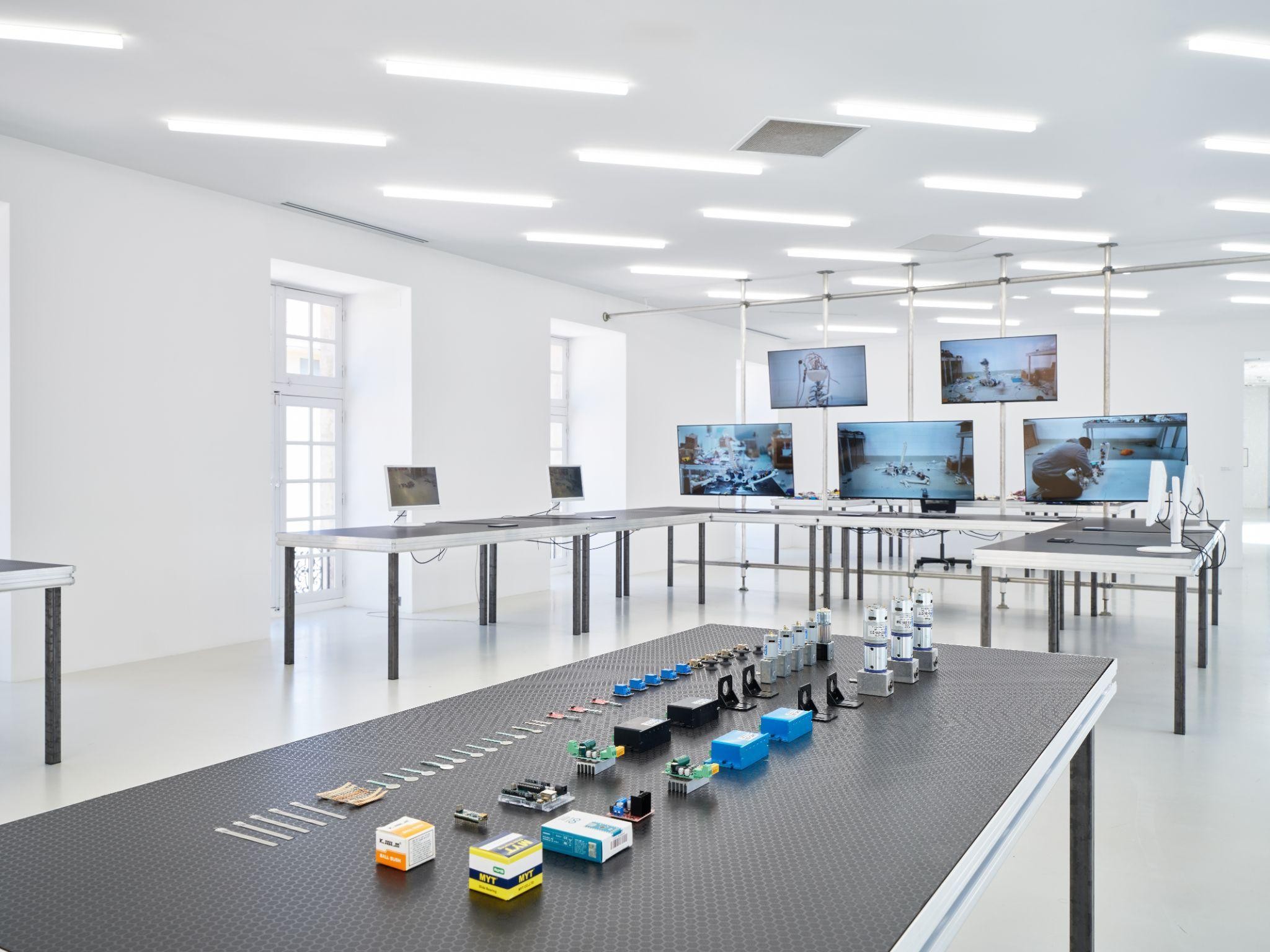
[Figure 1] Geumhyung Jeong, Under Construction (2024), Le murmure des Libres, Collection Lambert, Avignon, 2026. Photo: Jean-Christophe Lett
At each end of the installation, two stand-mounted microphones are set up to capture her voice. She approaches them. She is wearing a plain, everyday sports outfit. No flowery language, no unnecessary words. She simply says that she has tried to model movements. She proceeds to describe her creative process. She begins by referring to a previous installation, a group of robots on wheels. She then approaches an element of her installation, a small object with four wheels. She gets down on her knees. She crosses her arms over her chest, her hands against her collarbones. Then she gently lets her body settle onto her side, in an elegant relaxation reminiscent of the Copenhagen Mermaid. Slowly, she sets her little contraption in motion. She flips a switch several times. The small vehicle begins a repetitive, noisy back-and-forth movement.
The Kunsthalle Basel has long set the tone for which artists to keep an eye on, particularly when Elena Filipovic was the director of the institution. She had invited Geumhyung Joeng to occupy one of the art center’s majestic halls to present the work commissioned from her. Thus, Homemade RC Toy (2019) was presented. It was during this period that Geumhyung Joeng’s choreographic work caught the attention of the contemporary art audience. The choreographer began literally crafting her own dance partners. As the title of the piece suggests, these mechanical toys were homemade. Patiently, Geumhyung had learned the basics of micromechanics. She displayed her creations in the space and activated them at specific times. The audience was seated all around, precisely on what had previously served as the robots’ pedestals. After helping to seat the audience, Geumhyung undressed. In the center, a large black dance mat highlighted the five robots. They were figures on wheels that seemed male, their torsos pressed against the floor, their legs and arms outstretched, and attached to the wheels. With their heads bowed, a small wheel extended from the lower part of their faces, forcing each puppet to scrape the floor with its chin. The dancer then lay down on the torso of one of the robots in a strangely intimate gesture.
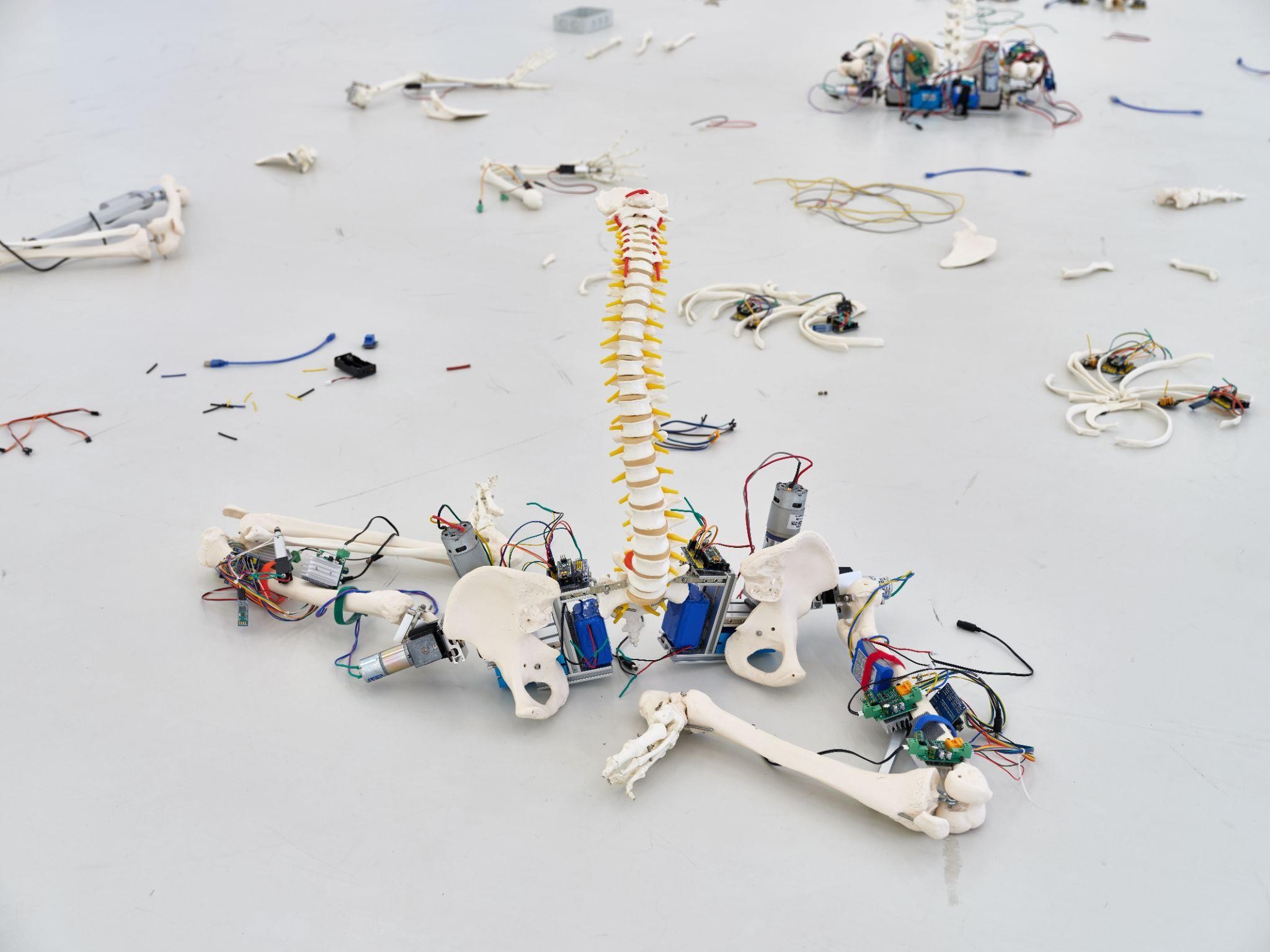
[Figure 2] Geumhyung Jeong, Under Construction (2024), Le murmure des Libres, Collection Lambert, Avignon, 2026. Photo: Jean-Christophe Lett
Then, crawling ever lower than their level, she begins to control their movements with her mouth and fingers using remote controls located on the characters’ chests or between their legs. We then witness a slow, mechanical ballet in which the relationship of domination and submission is indistinct, a highly sexual power expressed through movement in space. Each remote control operated a different robot than the one on which it was mounted. Thus, the young woman, naked on the floor, embodied the power to orchestrate all the slow movements of these absurd figures. The staging places the viewer within an interactive dynamic that affirms a reversal of the power of domination and, by extension, the political power play of a woman who, from the Atreides to Mata Hari, would have defied male dominance. But at the same time, her efforts to attain this sexual freedom seem constrained, held captive by invisible forces. Beyond the dynamic of master and slave, what is fascinating for an audience patient enough to let itself be immersed in the ritualized slowness of the performance is the genuine and contagious pleasure that takes root in this unnatural relationship. Contact with the ground is, above all, a way of making the relationship between the subject and the world possible, and everyone can allow themselves to be imbued with the attempt to tap into a greater, animistic power, to transmit the life force, the very flesh of the world, through a communion of desire with objects that would otherwise be inanimate.
Once again, she steps up to the microphone, on the other side of the large catwalk strewn with incomplete skeletons. She explains that her research began with the desire to free the object from gravity—to make it rise. She then approaches a collection of bones. A humerus attached to the radius and ulna of the forearm and ending in a hand formed a triangle connected by a motor. She attaches a small battery, plugs it in, then activates the arm, which indeed straightens up and seems to come to life, before falling noisily to the other side. Then it rises again, only to fall once more. The arm pounds the floor in a death throe of mechanical life.
One of the poetic qualities of Geumhyung Joeng’s work lies in the art of the attempt. When I asked her about how a performance went, she replied that everything had gone well even though some elements didn’t work out, but that this was part of the project. Confronting reality always involves an element of attempt. Embracing incompleteness is a life force, a breath. This is precisely what Maurice Merleau-Ponty describes when he speaks of the flesh of the world, the transcendence of the dualism between mind and body. Geumhyung’s entire body of work plays on an attempt to link that which thinks to that which is thought, the subject to the object. We are at the heart of phenomenological thought, particularly the concept of the flesh, the physical bond that unites the beholder with the thing beheld, a central concept in Merleau-Ponty’s own unfinished book, The Visible and the Invisible. Geumhyung Joeng’s body is on display. She exposes herself. She sees and is seen. Every stage of the construction of her mechanical creatures is broadcast on screen, like a demiurge under automated surveillance. Thus, through her motivated, sensitive, and desiring body, the artist embodies a bond of carnal continuity between all the dimensions of a world that is as real as it is fantastical. It is probably from this perspective that we should view Geumhyung Joeng’s relationship with machines, far more so than through the lens of concern over technological advances that now perfectly mimic all our gestures, words, and thoughts, but without the motivation.
Speaking into the microphone, the artist explains that she is seeking to recreate her desire. She positions her body in a highly sexual posture that now leaves no room for doubt. Then, once again, she kneels before a new installation, places her hands on her collarbones, and sits down on her side. She activates an unfinished column of vertebrae, whose sacrum is connected to a pelvis from which two femurs emerge, and which slowly opens. The vertebrae seem to dance. The legs spread much wider than the body would normally allow, as if the machine could amplify the blossoming of desire.
Geumhyung Joeng’s works do not make any assertions. She does not have the ambition of philosophers but rather that of poets. Nor does she hide anything. She enjoys showing what goes on behind the scenes. The craft table is visible, and the artist was able to continue her micromechanical work in full view of the public. In 2022 and 2023, she invited the public to visit her studio in Bucheon, a suburb of Seoul, to witness the conservation and packaging of her works. She takes on every role: performer, conservator, venue manager, and host. Having originally come from the theater, Geumhyung takes such pleasure in playing roles that one is never quite sure which character she is portraying—or even if she is a character at all. She is, in turn, caregiver, victim, model, lover, aggressor, and resuscitator, without the expression on her beautiful visage ever changing. During a discussion, I shared with her a rather tenuous point of view - I admit - on the irreconcilable difference between an interpreter and a performer. I told her that one of the two is lying, and that’s probably why theater and contemporary art are so far apart. According to my theory, based on the “suspension of disbelief,” that famous phrase coined by the poet Samuel Taylor Coleridge—audiences of art and theater are engaged in fundamentally contradictory ways. Geumhyung thought about it for a long time. She didn’t seem convinced by my far-fetched theory. Then she said to me, “I make the illusion without an illusion.” Geumhyung never truly collides with reality, for she knows how to create a frame-within-a-frame effect. She draws the viewer into a slow ritual in which assumptions echo one another to the point of dizziness. But the object she brings to life like a puppet remains the constant point of reference. The 2009 piece 7 Ways is a perfect example of this. She successively performs seven improbable uses of objects as trivial as a vacuum cleaner, plastic model or a melodica keyboard, which she blows into through a mask, like a kiss of exhalation.
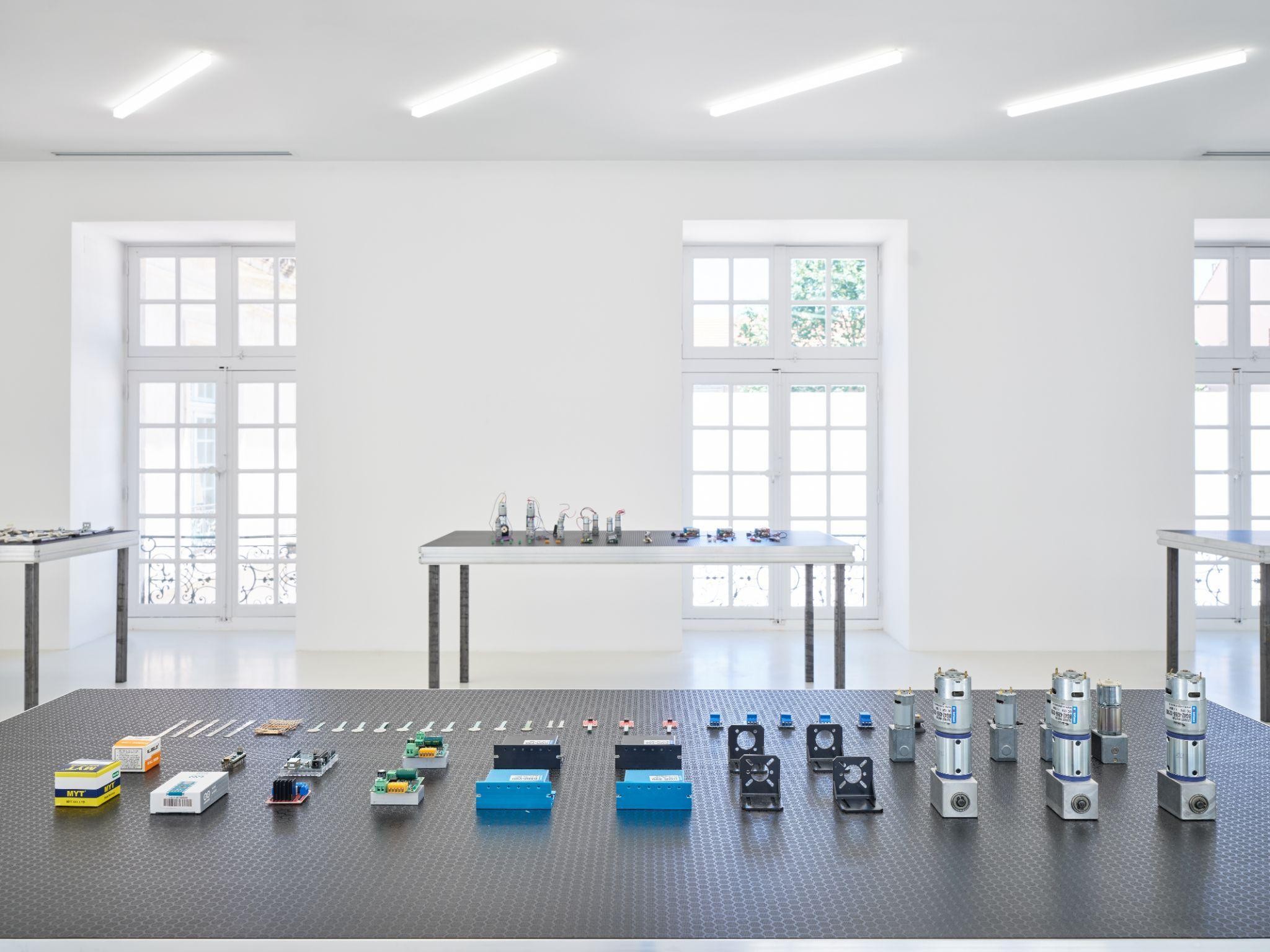
[Figure 3] Geumhyung Jeong, Under Construction (2024), Le murmure des Libres, Collection Lambert, Avignon, 2026. Photo: Jean-Christophe Lett
The installation, Removed Parts, presented in 2021 at the Leeum Museum of Art in Seoul and then at MoMA PS1 in New York in 2025, is what we might call in France a “Prévert-style inventory”—an endless visual poem of objects. Objects are placed on a platform and cataloged by type. Among them are casters, parts from remote-controlled cars, pipes, and disassembled components from medical models representing body organs, primarily genitalia. These are what Claude Lévi-Strauss calls précontraints, “pre-stressed” objects in his famous tribute to the handyman in La Pesnée Sauvage (1963). He uses this term to describe what the bricoleur will keep, catalog, and constantly reevaluate by virtue of the guiding principle that “it might always come in handy.” The perfectly ordered display of Removed Part is intriguing because it is unclear whether the parts are intended for a new DIY assembly or to illustrate an erotic and fantastical vision. This form of ready-made naturally brings to mind the inventor of the term, Marcel Duchamp, who is also a key figure when it comes to objects with an erotic purpose, notably the Bouche-évier (1964) a cast of his sink, a small bronze piece with rounded reliefs, which he gave as a gift to Maria Martins while concealing a masturbatory fantasy.
She now lies down on the floor. Her body tenses, as if seized by such a powerful emotional surge that she lifts her torso toward the sky, then closes up like a shellfish, only to open again. Her entire body seems to be caught up in an ecstatic breath. Then she stands up and positions herself in front of a rib cage lying on the floor. Once again, she sits down, following her ritual of presentation. It is unclear whether this ritual seeks recognition, a transmission, or consent from the skeletal machine. Then she activates the control to trigger the mimetic movement of the body as it opens toward the sky and closes again.
There is one constant throughout Geumhyung Joeng’s body of work that both connects us and unsettles us: sex. The artist does not hold back on the evocative power of sexual desire. The social issues surrounding sex are implicitly expressed in her choreographic works, and she does not remain silent on crimes, which are too leniently punished by governments, such as digital deception of a pornographic nature, sex trafficking and exploitation, and the use of technology to produce increasingly realistic sex toys. Geumhyung Joeng does not comment on these realities, but transforms them. In Oil Pressure Vibrator (2008), one of her early pieces, she explores the ambiguity between violence and desire. The performance initially took the form of a lecture on her work as a performer, which she describes as a series of unsuccessful attempts to find satisfaction with a sexual partner. Her past choreographed performances used everyday objects, which she presented as romantic partners who had failed to satisfy her. She laments the decline in the intensity of her orgasms. A sense of amusement ripples through the audience. Then she emotionally describes the long neck and strong arm of a hydraulic excavator. Having undergone rigorous training to operate this construction vehicle, she is seen in a video driving and operating the machine on a beach. She describes the thrill she gets from its power, its agility, and its jackhammer. Then, under her control, the machine’s hydraulic arm destroys a sand sculpture in her likeness, depicting her in a state of ecstasy. Meanwhile, on stage, Geumhyung begins an ultimate ceremonial act of masturbation using a toy shaped like a miniature excavator.
Oil Pressure Vibrator was created eighteen years ago, at a time when research in robotics and artificial intelligence did not yet foreshadow such rapid development. The work, however, conveys neither a message nor a commentary; rather, it presents a premise of continuity between the intimate, carnal realm and the technological world.
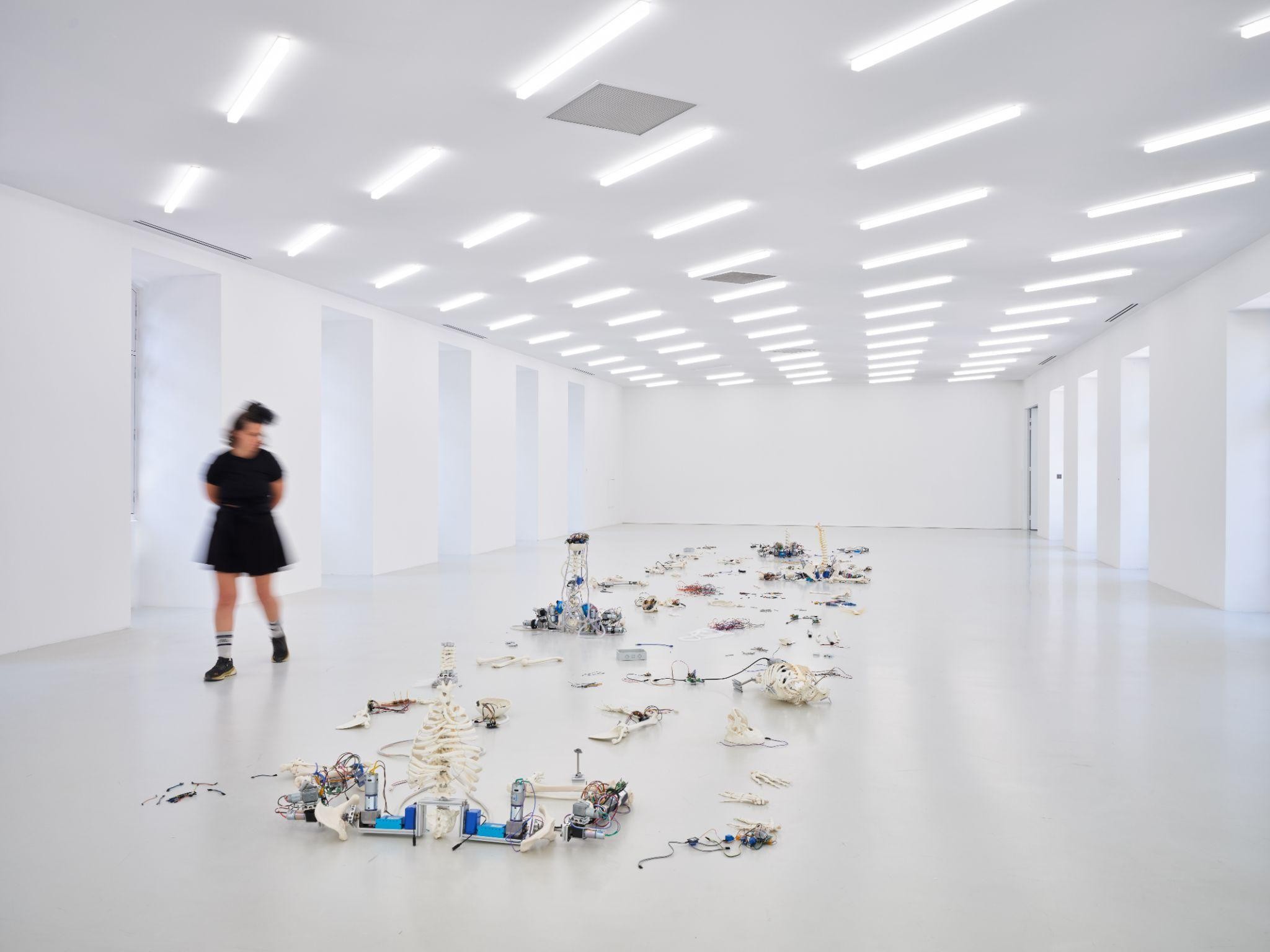
[Figure 4] Geumhyung Jeong, Under Construction (2024), Le murmure des Libres, Collection Lambert, Avignon, 2026. Photo: Jean-Christophe Lett
With the performance, Under Construction, presented at the Collection Lambert during the 2026 Avignon Festival, Geumhyung Jeong does not merely assemble and manipulate these skeletal machines; above all, she cares for them.
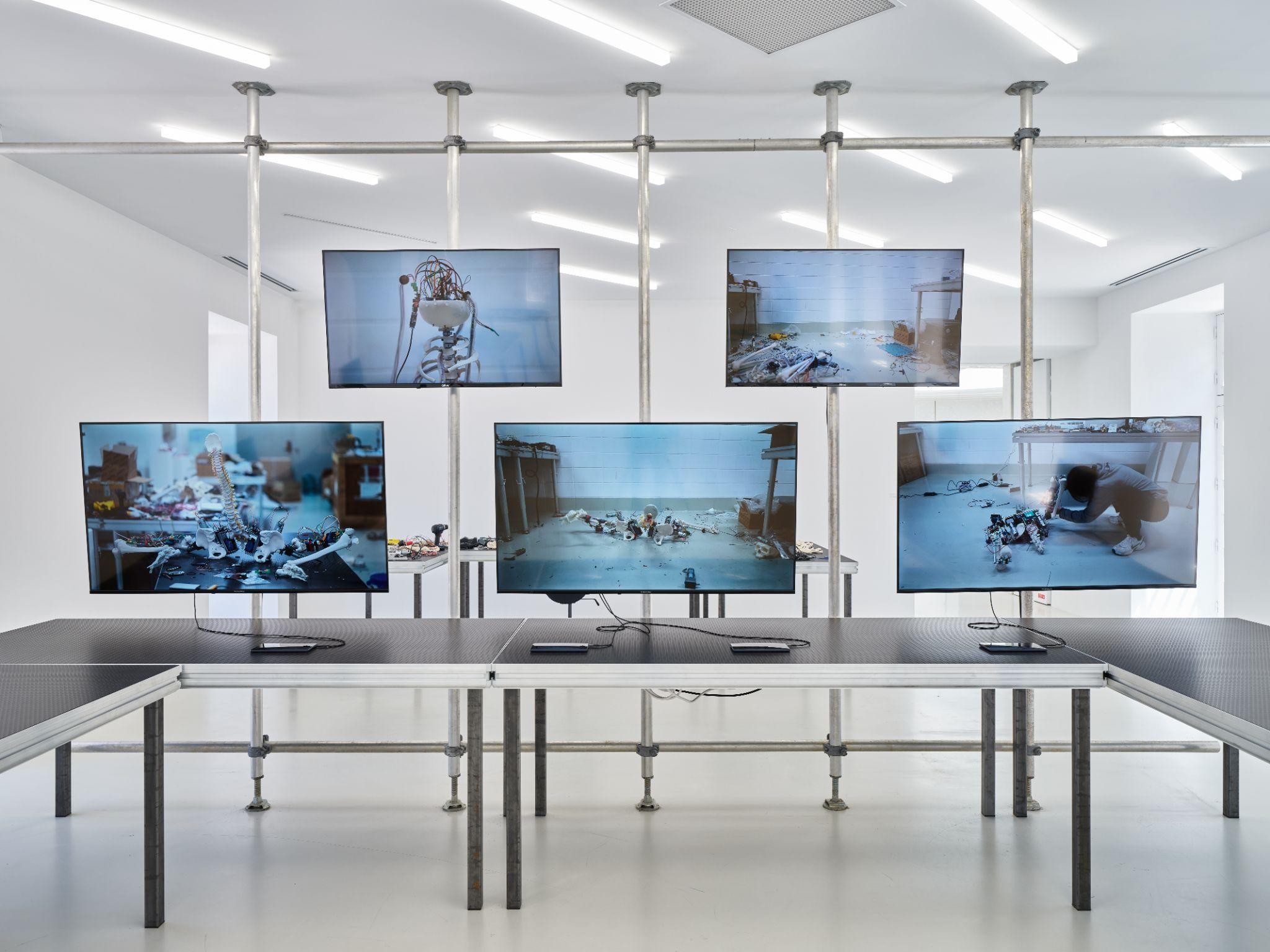
[Figure 5] Geumhyung Jeong, Under Construction (2024), Le murmure des Libres, Collection Lambert, Avignon, 2026. Photo: Jean-Christophe Lett
Caring for a technical object also means having control over it, understanding that the robot merely artificially reproduces our motivated and sensitive gestures. Caring for the machine, working on it with such meticulous attention to detail as she does, is also a way of caring for oneself. The precision assemblages created by Geumhyung rise as if by magic, defying gravity, only to fall heavily back into their state as objects—a process that awakens in the viewer a form of empathy through which they may recognize the limitations of their own body. These mechanical movements are intended neither to succeed nor to fail, but to continue relentlessly, through practice, bearing witness to a perpetually unfinished exploration of pleasure, movement, and the object. Geumhyung Joeng embodies the concept of the Objet petit a formulated by the French psychoanalyst Jacques Lacan, referring to the “object” that is the cause of desire. According to Lacan, desire is always the manifestation of a real, symbolic, or imaginary lack. Thus, by projecting her desire onto the object she creates in order to interpret it, its success or failure contributes equally to fueling the lack, which is the source of that very desire. Thus, the circle is complete.
After leaving the room with applause, the artist once again arranges the elements one by one throughout the space to reassemble the sculpture at the center of the space that had previously been a living theater.
#Geumhyung Joeng #Under Construction
François Quintin
from | Director of the Collection Lambert in Avignon
Director of the Collection Lambert in Avignon since September 2023. In 2026, he curated a series of solo exhibitions by non-Western female artists titled 《The Whisper of the Free》, including Geumhyung Joeng’s, 《Under Construction》. Previously, he served as the Delegate for the Visual Arts at the General Directorate for Creative Arts of the Ministry of Culture, a position he held since January 2020. Among his ongoing priorities, the expansion of the right to exhibit and, more broadly, the issue of artists’ livelihoods in France held a particularly prominent place. Until 2019, François Quintin served as Deputy Director of the Galeries Lafayette Corporate Foundation and the Moulin Family Endowment Fund. He joined the Galeries Lafayette Group in 2011 to help envision and establish these two entities. As a new kind of private art center, Lafayette Anticipations provides artists, designers, and fashion creators with support at the very heart of their creative processes, offering customized solutions for artistic production. Previously, François Quintin held various positions, serving successively as director of the Xippas Gallery in Paris (2007–2011), director of the Frac Champagne-Ardenne (2001–2007), and curator at the Cartier Foundation (1994–2000).