An Ensemble of the Informal
Editor : Kang Su-Mi / Professor of Dongduk Women’s University Registration date: 2025-09-18
Editor : Kang Su-Mi / Professor of Dongduk Women’s University Registration date: 2025-09-18
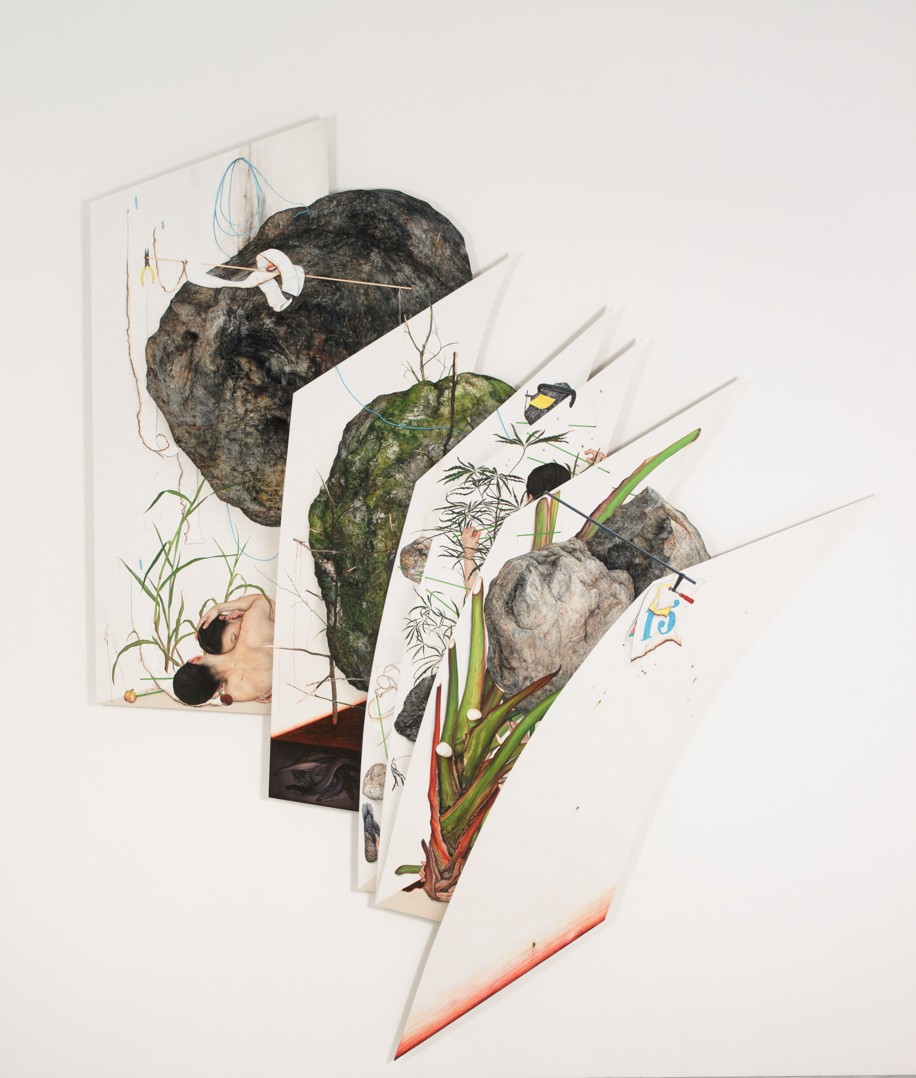
Figure 1. Lee Jinju, Sorrow and Stone, 2025, Powdered pigment, animal skin glue and water on unbleached cotton, 386x322cm. Image courtesy of Arario Gallery.
On the Figurative Paintings of Lee Jinju
I. Visible Motifs, Reflective Frames
A stone cloaked in vibrant green moss; a tropical plant, its base and branches severed; calendar paper, scorched at the edges; roughly broken tree branches; a line suspended in mid-air, severed from its connection; a young woman, her face hidden in another’s embrace; and a slightly older woman, arms encircling the younger protectively, shielding her head and ears. Her neck and back bear scratches and puncture wounds. Beneath the fig tree pierced with incense sticks, a writhing cluster of eels coils in a dark pool of blood.
In the Korean art scene, Lee Jinju, a mid-career artist in her forties, is recognized as a leading figure in contemporary figurative painting rooted in Oriental painting traditions. In Sorrow and Stone (2025)(Figure 1), viewers can discern figures similar to what I described in the beginning, serving as visible motifs that convey the work’s symbolic meaning. The artist illustrated each figure with hyperrealistic manner, making their individuality striking, while all remain imperfect. In terms of pictorial content, Sorrow and Stone portrays beings corrupted, damaged, or vulnerable, along with the subtle emotions they evoke.
But what of the painting’s form? Sorrow and Stone departs from the conventional rectangular frame long dominant in both Eastern and Western painting, instead aligning with what contemporary art terms the “shaped canvas.” Its shape resembled the outline of six white walls or screens collapsing like dominoes. Lee Jinju prepares non-standard canvases of specific shapes for each work according to her artistic intent, using shaped canvases crafted by her husband and fellow artist Lee Jeongbae, with whom she collaborates. According to the artist, Sorrow and Stone consists of wall-like screens—consecutive yet discontinuous—forming "a form that gathers disparate scenes into a single entity."1) As the centerpiece of Discontinuouscontinuity (Arario Gallery Seoul, 13 Aug–9 Oct 2025)(Figure 2), this work shows the canvas frame is more than material itself—it conveys the artist’s ideas. The non-standard canvas both underscores the uniqueness of Lee Jinju’s paintings and provides an intellectual framework.
II. An Enchantment by Contradiction
In the early 1960s, art historian and art critic Michael Fried identified “absorption” as central to modernist abstract expressionism while criticizing emerging minimalism for its “theatricality.” Focused on fleeting audience experience, minimalism became mired in theatricality, losing the “presentness and grace” of fine art.2) Postmodern art, in turn, critically revisited modernism’s self-referentiality, embraced Fried’s notion of theatricality as an anti-art strategy, thereby revitalizing it.3) During this dialectic-historic process, the term “shaped canvas” emerged to describe painterly experiments that challenged the traditional canons of art and deconstructed the convention of representation.
Lee Jinju’s non-conventional canvases are significant both as formal explorations in plastic art and as intrinsic critiques of painting in modern art history. She transforms the pictorial plane to suit her themes, reflecting on painting norms and analyzing conventional formats, which constitutes the intellectual dimension of her art. Yet intriguingly, she uses these analytically chosen formats to depict hyperrealistic imagery that evokes strong emotions—fragmented objects and figures, dissected spaces and complex situations, and scenes of intense sentiment. This constitutes the subjective, emotional dimension of her paintings. Thus, her work can be defined as painting in which form and content pursue distinct paths. From the perspective of formal aesthetics, Sorrow and Stone is a critical, conceptual work that deliberately breaks the medium-specificity of painting. Its diverse motifs convey symbolic and intuitive meanings, creating a narrative that evokes emotional and theatrical engagement.
This contradiction is a key aesthetic quality of Lee Jinju’s paintings. In Sorrow and Stone and nearly all her works, she heightens visual impact through the duality of form and content and the tension between structure and narrative. Informal frames, fragmented motifs, architectural structures, emotive details, and communicative symbols that resist straightforward interpretation together shape her unique artistic identity. These elements arise from both her two decades of artistic expertise and a subjectivity formed by life experiences, inner struggles, and sensibility. That is why Lee Jinju's paintings can offer viewers an irresistible hybrid experience of pictorial immersion and theatrical perception.
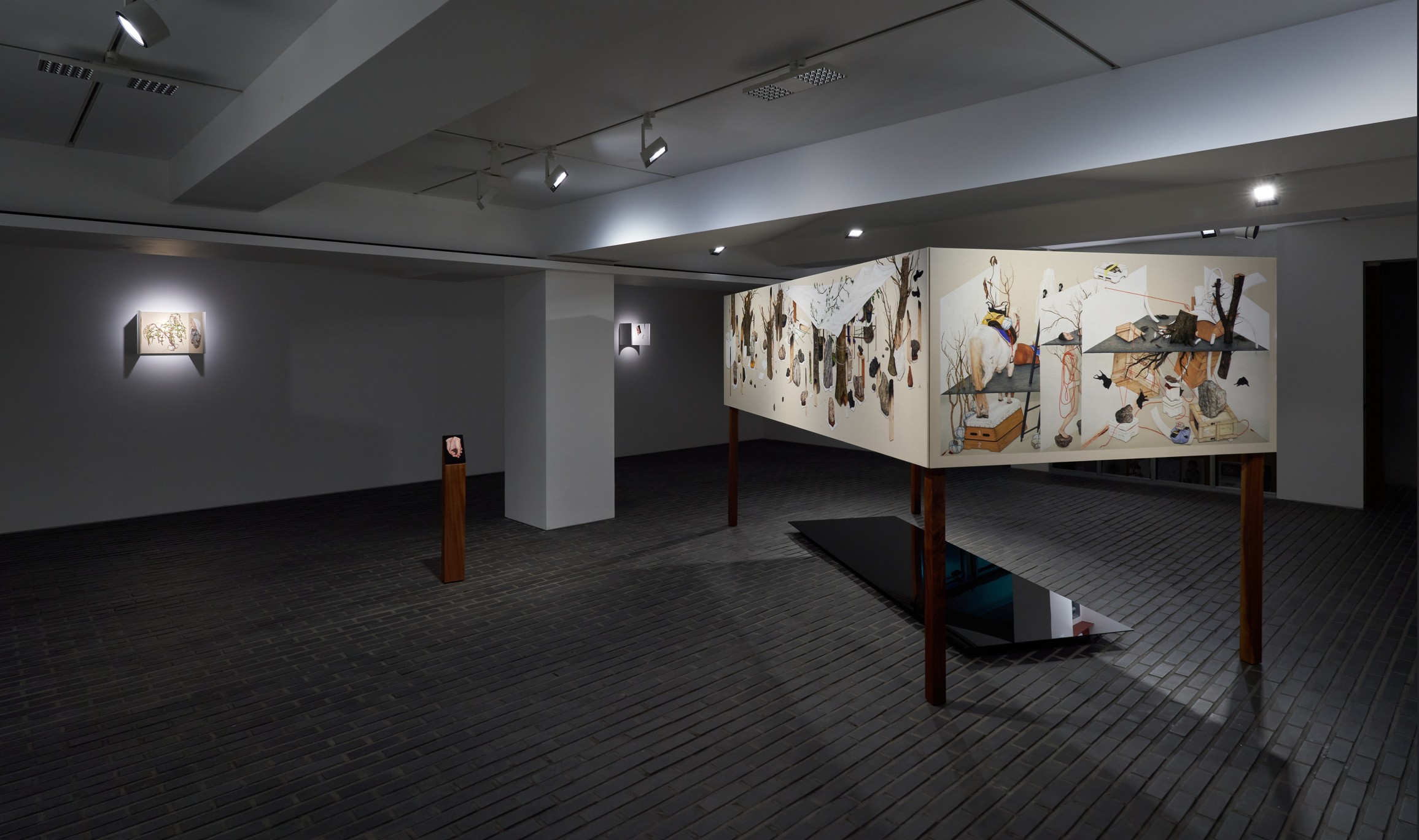
Figure 2. Lee Jinju, Discontinuouscontinuity, 2025. Installation view of Arario Gallery Seoul. Image courtesy of Arario Gallery.
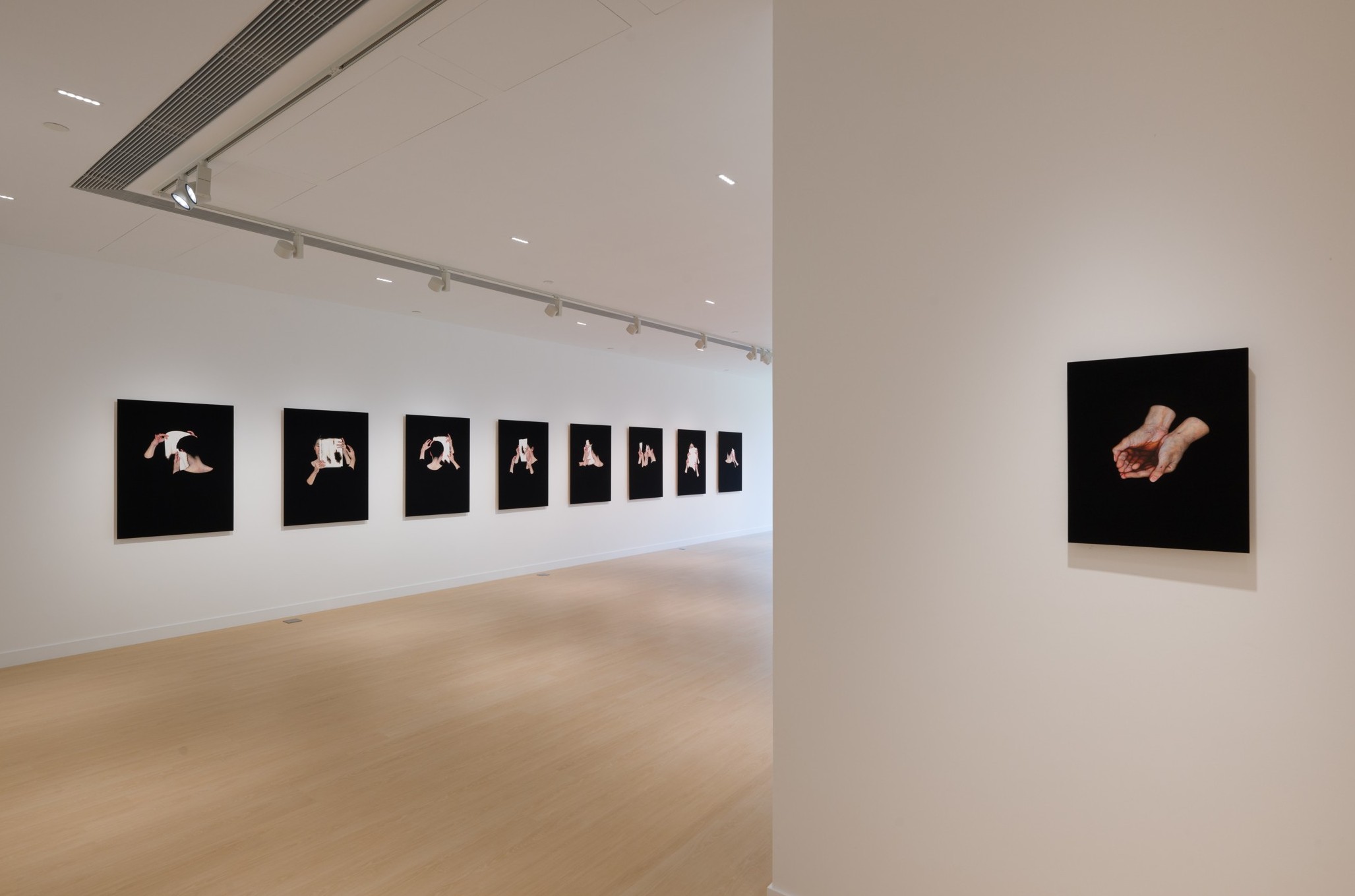
Figure 4. Lee Jinju, No Ground, 2025. Installation view at Yuz Flow: Project Space of Art,
Hong Kong. Image courtesy of the artist.
Ⅲ. From Fragments to Ensemble
As of 2025, Lee Jinju has held 14 solo exhibitions in Korea and abroad. Her works are collected in major art museums, including the National Museum of Modern and Contemporary Art, and she has been invited to the major international exhibitions representing what Korean contemporary painting is now. However, Lee Jinju has achieved a vast amount of work and her own aesthetics that cannot be adequately captured by such objective facts. Her solo exhibition Discontinuouscontinuity at Arario Gallery Seoul presents 54 paintings in diverse formats and sizes, each marked by visual completeness and intense narrative impact. Distinctive frames and architectural structures defy convention, and together they transform the gallery into a single stage, forming an unparalleled ensemble.
In her recent solo show 無著 No Ground in Hong Kong (Yuz Museum Project Space, 5 Jan–2 Mar 2025)(Figure 3), Lee Jinju presented images of female faces and hands on black backgrounds, partially obscured by scorched white paper. These haunting works both captivate the eye and function as enigmatic carriers of meaning, inviting open-ended interpretation. The black pigment—“Lee Jeongbae Black,” developed by the artist’s partner through countless experiments—contrasts sharply with the charred paper and the woman’s pale complexion, heightening the sense of mystery. More than a color, Lee Jeongbae Black propels Lee Jinju’s painting beyond two-dimensional representation into the dramaturgy of psychological drama. Viewers thus encountered an art form that engaged not only their senses but also their perception and inner selves, often without realizing it.
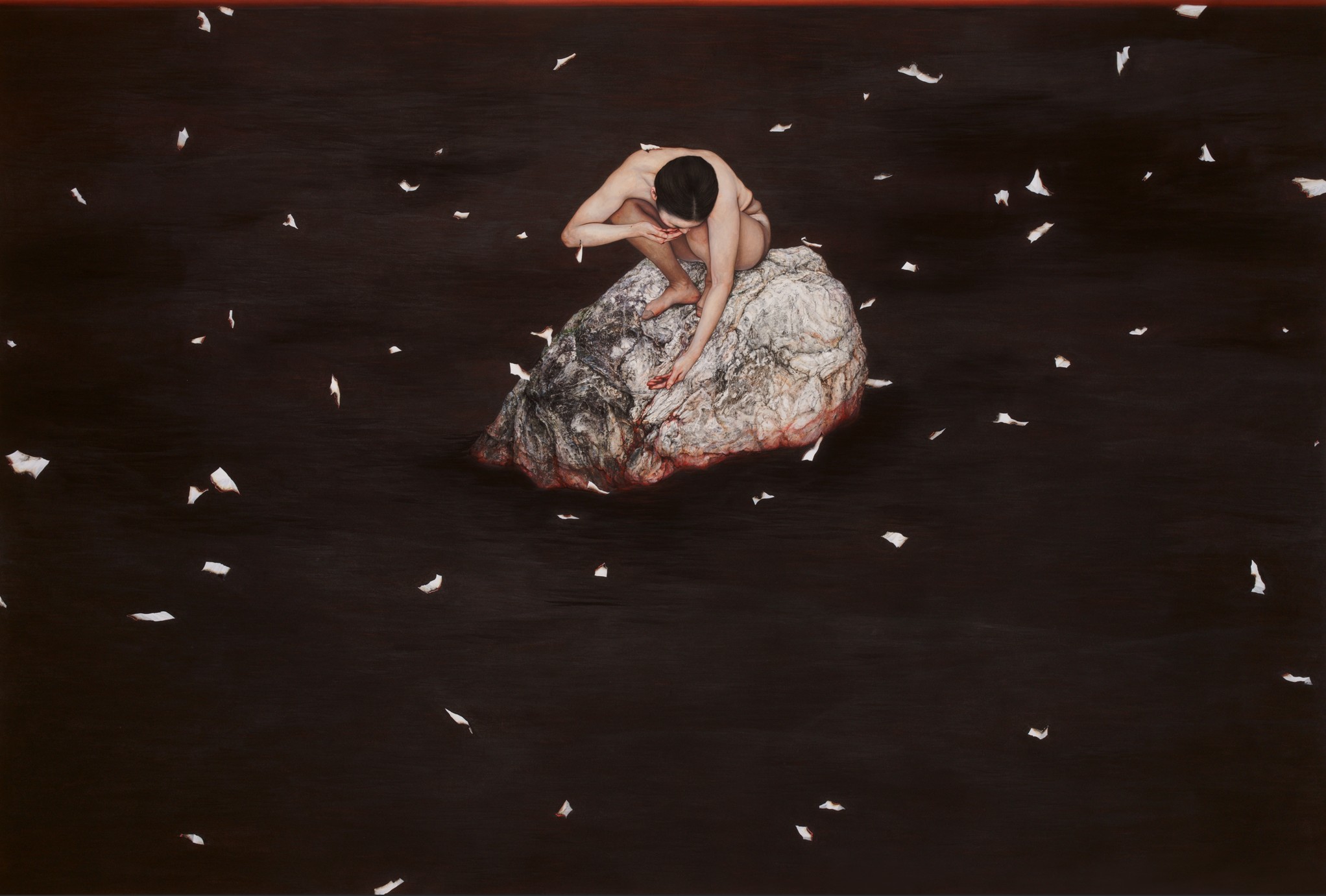
Figure 5. Lee Jinju, Convex Courage, 2025. Powdered pigment, animal skin glue and water on unbleached cotton, 200x300 cm. Image courtesy of Arario Gallery.
Ⅳ. The Painter’s Desire and Pursuit
Ironically, although Lee Jinju’s paintings are powerfully immersive and theatrical, she focuses on “things that cannot be named, expressed, or visualized4).” How can this be understood? The artist explains that her paintings “capture only fragmentary aspects” of the beings she encounters in life. While these statements could be seen as testament to the artist's humble attitude, I want to interpret them within a broader context. Classical painters sought to unfold the world as “a great book”and represent it in their paintings with perfection. For contemporary artists, however, the world is no longer a transcendental whole but a reality where individuals coexist by intersecting with one another’s otherness and difference. Many now see artistic creation as a way of engaging with fragments of experience, memory, events, processes, and life itself. This is the philosophical importance of contemporary art. In this sense, Lee Jinju’s approach is distinctly contemporary.
Prior to Discontinuouscontinuity, Concave Tears and Convex Courage (2025)(Figure 4) hold special significance for both the artist and the viewers. Installed back-to-back, they appear as a single double-sided work. Concave Tears displays the complex forms typical of Lee Jinju’s large-scale paintings, while Convex Courage depicts a bleeding woman precariously seated on a rock in a blood-red sea. These works exemplify both the intellectual and emotional qualities of Lee Jinju’s art. The artist wishes the viewer to note that the forms in Convex Courage extend beyond the rectangular frame. The painting actually centers on a woman, with fragments of burnt paper scattered around her, some escaping past the canvas edge. Lee Jinju described this as “a painting filled to the brim.”She had long hesitated to use such a composition, believing her work “only captured the world’s minutiae through language, then transposed them into images,” making full-scale production feel overambitious. Only with Convex Courage did she attempt to “acknowledge a larger, more expanded world and, paradoxically, reveal the finite scope of my own vision through a full-screen canvas5).” I perceive in the artist’s thoughts the life attitude and aesthetic awareness that Lee Jinju seeks through her painting. That is respect for minorities, the other, and the unrepresented. Lee Jinju’s painting aesthetic lies in moving beyond her familiar amorphous canvases, confronting the rectangular frame, and exploring its potential for new work. While many contemporary artists address such issues, Lee Jinju is distinctive in doing so through figurative painting. Above all, her canvases form an ensemble based on fragments. We therefore anticipate the new dimensions her paintings will open.
1) Lee Jinju and Kang Su-Mi in conversation, 23 August 2025, Arario Gallery, Seoul.
2) Michael Fried (1998), Art and Objecthood: Essays and Reviews. Chicago: University of Chicago Press. pp. 167-168.
3) Harland, B.(2023), “Michael Fried’s theatricality and the practice of painting”, Journal of Visual Art Practice, 22(1), pp. 47–59. https://doi.org/10.1080/14702029.2023.2170849
4) Lee Jinju and Kang Su-Mi in conversation, 23 August 2025, Arario Gallery, Seoul.
5) Excerpt from an email by Lee Jinju to Kang Su-Mi, 23 August 2025.
from | Professor of Dongduk Women’s University
Professor, Department of Painting, College of Arts, Dongduk Women’s University Specializing in aesthetics and art criticism, she is the author of Porous Art and Aisthesis: Thinking Aesthetics with Walter Benjamin, among other publications. Her research focuses on contemporary culture and arts, art criticism, Art+AI theories, and public art projects. She currently holds the following positions: Director, Social Service Center, Dongduk Women’s University Director, Living Lab Rise Center, Dongduk Women’s University Member, Seoul Museum and Art Policy Review Committee Member, Humanities Korea Project (HK+, HK3.0) Management Committee, National Research Foundation of Korea Steering Committee Member, Changwon Sculpture Biennale Planning Director and Editorial Board Member, Korean Society for Aesthetics and Arts Editorial Board Member, Cultura Magazine